
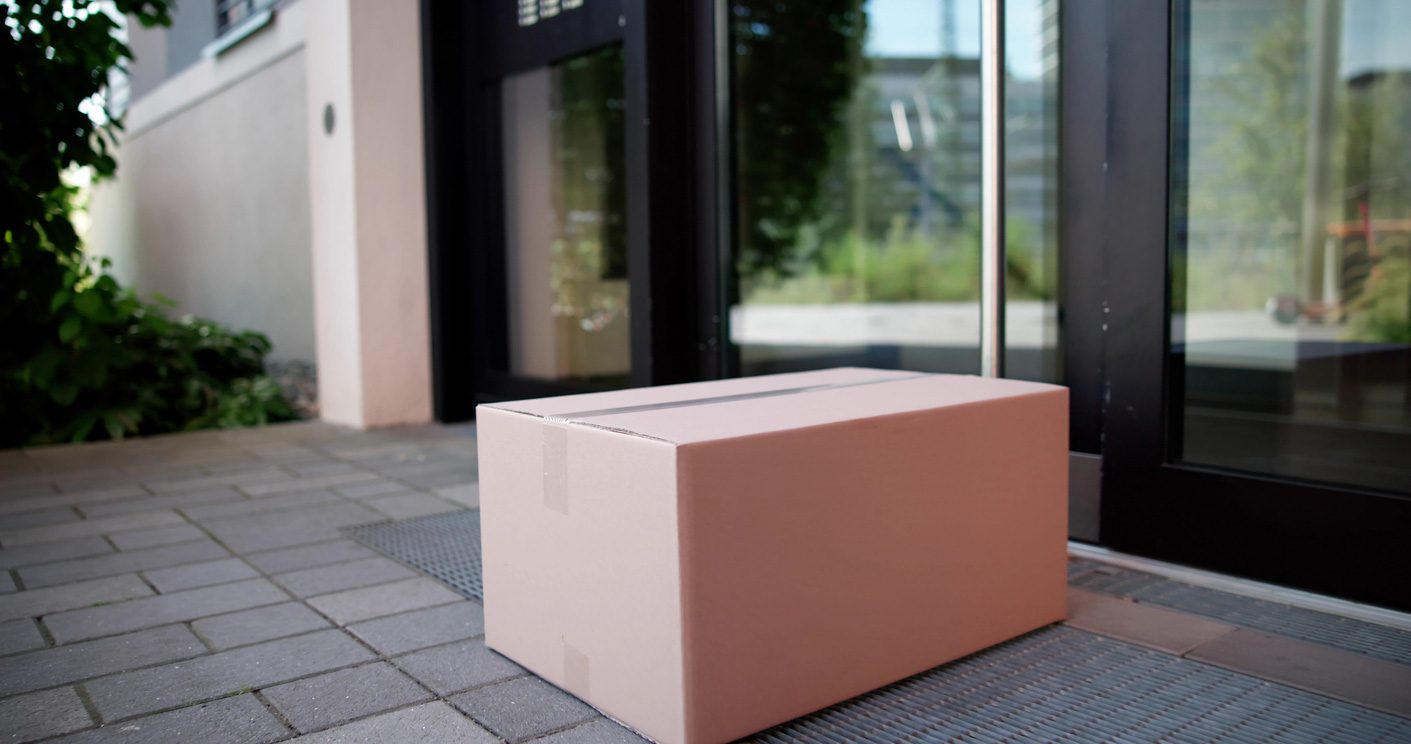

A resident emails the leasing office, insisting a $900 package never arrived. Your front desk has no log of the package, no timestamp, and no record of who handled it. The resident, frustrated with your staff, escalates to a small claims court. Now your team must spend days reconstructing the details of a delivery that was not documented. If you multiply that across a 300-unit portfolio, week after week, that kind of exposure is exactly why owners who want package liability reduction at multifamily can no longer treat package handling as a back-office afterthought.
If you’re evaluating a Multifamily Package Delivery Solution to secure every package delivered to your property, options should include a full audit trail and digital chain-of-custody for added protection. When most people hear the phrase “apartment liability”, they think of insurance and taxes. This article covers a package delivery-related angle that is ignored: where liability actually comes from, how documentation wins disputes, and how the right system drives front desk workload reduction at the same time.
Why Package Liability Is Rising for Multifamily Owners
Package liability used to be a rounding error. Today it’s a line item. Three forces are pushing it up at once, and they compound across a portfolio.
First, overall package volume and value keep climbing. According to the Pitney Bowes Parcel Shipping Index, US parcel volume reached 22.4 billion in 2024, up 3.4% year over year, and is projected to hit 30.5 billion by 2030. More parcels in motion, often at higher values than in the past, means more dollars are sitting on your shelves every day.
Second, resident expectations have shifted. When a delivery goes missing, residents no longer treat the lost package as the carrier’s problem; they treat it as their property. They also expect a fast resolution or reimbursement.
Third, insurance carriers are tightening exclusions on theft and loss, so coverage you assumed you had may not apply. Courts have also started weighing how much responsibility a building assumes once a package crosses the threshold. Put it together, and package liability reduction that multifamily operators once ignored is now a measurable financial risk that grows with every delivery.
Five Sources of Package Liability in Multifamily Properties
Before you can reduce package liability at multifamily properties, you need to identify where it comes from. Most exposure falls into five categories. Each type can be documented and prevented with the right process. Here are the five liabilities every asset manager should be able to defend against.
Theft From Common Areas (Porch, Lobby, Mail Room)
Unsecured drop points are the single biggest source of parcel loss. When couriers dump packages in a lobby, a hallway, or an open mail room, anyone passing through can walk off with them. The numbers are stark. The USPS Office of Inspector General reports that at least 58 million packages were stolen in 2024, tallying up to $16 billion in losses.
For staff and operators at multifamily properties, every stolen package left in a common area becomes your problem, because the resident’s first call is to your office, not the carrier. Open mail rooms that don’t feature access control or a digital chain of custody for all parcels will have no record to review if a theft occurs. More to the point, you can’t defend a claim without documentation.
A secure, access-controlled room changes the equation. When only approved couriers, residents, and property staff can enter the package room, casual theft drops sharply as your property keeps a record of everyone who was in the room. That record is the difference between absorbing a loss and disproving a false claim.
Loss Within the Building (Misplaced, Lost Log)
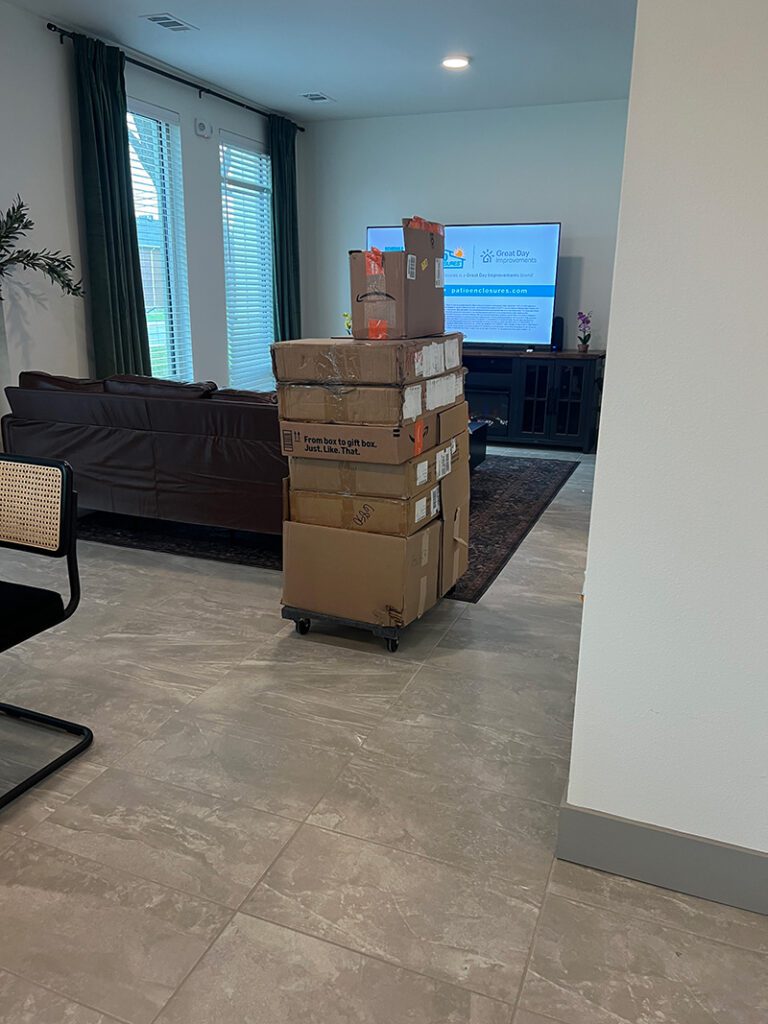
Complicating matters, not every missing package is intentionally stolen. Plenty of parcels are lost or misplaced inside the building. Couriers may dump packages in unsecured areas if there are no clear delivery instructions. Staff members could move them before noting them in the manual delivery logs. In some reported cases, the paper log disappears before anyone records the delivery.
This kind of package loss is harder to dispute than theft, because there’s no clear event to point to. The package was delivered, the carrier shows proof of delivery, the resident may even receive a notification from the carrier, and yet no one at the property can find it. The resident then faults the property for losing their package, and the liability lands on you.
The root cause is almost always a gap in documentation. When packages aren’t logged in at the moment of delivery, and their location isn’t tracked afterward, a single misplaced parcel can consume hours of staff time. A system that digitally records each package’s location from the moment it’s delivered turns a frantic search into a five-second portal lookup, with a chain of custody record that protects you when a resident reports a loss.
Misdelivery to the Wrong Unit or Building
In larger communities with high unit counts and multiple buildings, misdeliveries are increasingly common. Some properties with multiple buildings have a central parcel drop-off hub, while others do not. It may not be apparent which units are located in which building, and further, couriers may not have access control credentials for all buildings. This increases the likelihood of packages being dumped in unsecured locations. Residents are left to hunt for their packages with little more than a carrier notification to go on.
These clumsy deliveries create a unique liability problem, because the package was technically delivered and maybe even picked up, but it cannot be confirmed if it was done so by the right person. Without a digital record of who collected it, you have no way to resolve a dispute or prove that your team followed protocol.
Resident authentication closes this gap. When picking up from a secure package room that requires a QR code or PIN tied to the correct resident, this ensures that all packages are released to the correct individual. The system confirms their identity before the door opens, and it logs exactly who collected each item. That single control removes one of the most frustrating dispute points in multifamily package handling by answering the question of who took the package before it’s ever asked.
Damage During Handling
Parcel damage is the quiet liability that most properties overlook. This occurs when packages get stacked under heavier boxes, knocked off a shelf, or left in a hot lobby for days. When the resident opens their package, and the contents are ruined, they want to know who’s responsible.
Proving where and when damage occurred is nearly impossible without documentation. Multifamily operators are left to negotiate from a position of weakness when they don’t have documented proof of the package’s condition at delivery.
Package rooms with designated zones lowers the risk of parcel damage in the first place. Cold storage items belong in a refrigerated zone, oversized parcels in an oversized zone, and flat items should be placed vertically in labeled bins where they won’t be crushed. The Smart Package Room system separates standard, flat, oversized, cold storage, and dry cleaning items, thus reducing the likelihood of handling damage. When a package’s location and zone are documented from pickup to delivery, and the automatic notification includes a picture of the parcel, you can prove exactly how it was stored, which protects you if a damage claim surfaces.
Disputes Without Chain of Custody Documentation
Every package liability source above shares one root cause: the inability to prove what happened. A dispute without documentation becomes one person’s word against another’s, and properties usually lose that argument by default.
Manual logs only make it worse. Paper sign-in sheets are often incomplete, illegible, or missing entirely by the time a dispute escalates. Staff memory becomes unreliable with so many parcels entering the property. Without a verifiable record, you can’t show when a package arrived, where it was delivered, or who collected it.
This is the gap that drives most package liability reduction issues that multifamily owners care about. A documented chain of custody, from the moment a courier delivers a package to the second a resident picks it up, turns a he-said-she-said dispute into a matter of record. Most disputes end before they reach a claim when the audit trail is immediately accessible. The properties that pay out after theft or similar incidents are almost always the ones that can’t produce a package record.
How Chain of Custody Documentation Reduces Liability
Documentation is core to the package liability reduction that multifamily operators can rely on, and chain of custody is how you build it. The Smart Package Room system establishes a verifiable chain of custody by documenting every package’s location from the time it is delivered into the room until it is retrieved by the resident.
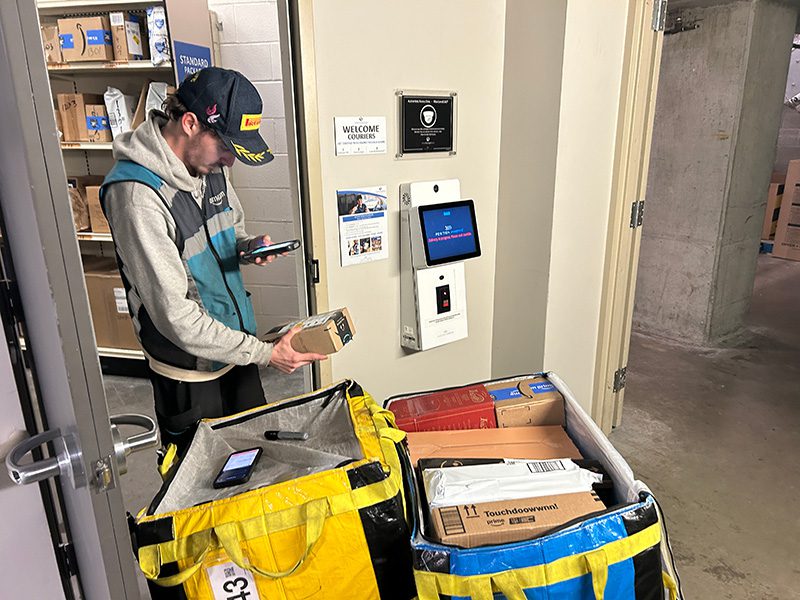
The process starts at delivery. Couriers log each package in seconds using the MobileKiosk™ handheld device, which captures recipient information from the label with optical character recognition (OCR) and creates a time-stamped record the instant a package enters the room.
From there, computer vision-enabled tracking from the Amoeba Module records the exact location of each standard package on the shelf, so the system always knows where the package has been placed and if it has been moved.
Resident pickup closes the loop. Residents gain access to the package room with a QR code or PIN, and the system logs who collected each package and when. If a dispute arises, the full audit trail is accessible from the portal in seconds, not hours. The platform is also built around ISO 27001 and ISO 27701 privacy and data-protection standards, so the records you rely on are handled securely.
Common Liability Mistakes Asset Managers Make
Most liability exposure traces back to a handful of avoidable habits. These five mistakes show up repeatedly in the properties that end up paying out claims:
- Relying on manual paper logs, sign-in sheets are routinely incomplete, illegible, or lost, and they often prove unreliable in dispute resolution.
- Letting front-desk staff handle packages without sign-off, when no one records who accepted or released a parcel, accountability vanishes, and disputes become unwinnable.
- Operating with no video record of the handoff, a room without presence sensors leaves you blind if a dispute arises, because a missing package has no traceable history.
- Skipping a clear lost-package protocol, when residents don’t understand the pickup process, and staff improvise when there’s a dispute, incident resolution is inconsistent or unsatisfactory.
- Assuming insurance covers packages, most policies exclude package loss, so coverage you counted on may not exist when a claim is filed.
Each of these is a documentation gap hiding in plain sight. Close the gaps to avoid the frustrating disputes that drain staff time and reserves. Strong package liability reduction at multifamily properties begins by eliminating these five habits first.
Building a Liability-Resistant Package Operation
You won’t reduce liability with a single fix. You must build an operation that documents everything by default. Four steps turn package handling from an operational exposure into a defensible system.
- Audit your current exposure quarterly. Review your package delivery procedure, walk the package room to check for operational blind spots, and identify every point where a package could change hands without a record. You need visibility to close these gaps, and a quarterly cadence catches new ones before they turn into claims.
- Implement a system with a built-in chain of custody documentation. The Smart Package Room system supports the digital audit trail from end to end. The MobileKiosk logs each delivery, the Amoeba Module tracks each standard package’s location, and presence sensors monitor the room 24/7 without relying on staff to watch it.
- Train couriers and staff on one delivery protocol. Every package should follow the same documented path from the property’s door to the right shelf or zone inside the package room. Engage all couriers when they enter your property, and ensure all staff know how to use the package room.
- Communicate the lost-package process to residents. Put lost package procedures in the welcome packet and post them inside the package room. When residents know the protocol, they feel more confident with every online order and every delivery.
Done together, these steps are the backbone of package liability reduction that multifamily owners can scale across an entire portfolio.
Frequently Asked Questions about Package Liability Reduction in Multifamily
1. What Is Package Liability Reduction in Multifamily, and Why Does It Matter?
Package liability reduction in multifamily is the practice of limiting a property’s financial and legal exposure when residents’ packages are stolen, lost, misdelivered, damaged, or disputed. It matters because the cost of losing parcels keeps rising. The Pitney Bowes Parcel Shipping Index counted 22.4 billion US parcels in 2024, up 3.4% year over year, with 30.5 billion projected by 2030. More packages at higher values mean your package room shelves have a higher cost of exposure every day. Installing a package management system with a documented chain of custody will convert that exposure into a defensible, manageable risk.
2. Are Property Managers Legally Responsible for Residents’ Packages?
Legal responsibility depends on your property’s jurisdiction and lease language, so don’t consider this legal advice. Responsibility tends to hinge on whether the property has accepted custody of the package. The practical issue is what can or cannot be proved. Even when a property isn’t strictly liable, a missing package with no record often results in a payout, or more detrimentally, a damaged resident relationship. A documented chain of custody changes your exposure by proving exactly what happened, which allows you to make a strong case whenever disputes arise.
3. How Does Chain of Custody Documentation Reduce Liability?
A digital audit trail creates a verifiable record of every package that enters your property, from delivery to resident pickup. Time-stamped logs capture the moment an item is delivered, computer vision-enabled tracking records its exact location on the shelf, and resident authentication confirms who collected it. When a dispute arises, you’re able to produce the full audit trail in seconds, not minutes or hours. The information provided in that package record is what wins disputes, because it confirms where the package was located and who handled it at every step.
4. What Are the Most Common Package Liability Claims in Apartment Buildings?
The most common claims fall into five buckets: theft from unsecured areas, loss inside the building, misdelivery to the wrong unit, damage during handling, and disputes with no documentation. Theft is the most common claim, but loss and misdelivery are often harder to resolve because the package was delivered into the room. That’s why effective package liability reduction at multifamily properties must address all five categories, not just theft. The common thread is the digital documentation that makes any claim defensible.
5. Does Insurance Cover Lost Packages in Multifamily Properties?
Often it doesn’t. Most property and general liability policies exclude resident package loss. Carriers have tightened those exclusions as theft climbs, with the USPS Office of Inspector General reporting up to $16 billion in package-theft losses in 2024. Renters’ insurance may cover the resident’s belongings, but that doesn’t shield the property from a dispute. What changes your real exposure is provability. When you can show a documented chain of custody, you can prove that the package was delivered, stored, and released correctly. Step one is to review your specific coverage with your carrier and counsel.
6. How Can Technology Help with Package Liability Reduction in Multifamily?
Technology helps with package liability reduction in multifamily by automating the processes and documentation that manual systems miss. Computer vision-enabled tracking records each package’s location, automated logs time-stamp every delivery and pickup, and an accessible audit trail resolves disputes in seconds. Access control limits the room to approved couriers, residents, and property staff, while presence sensors monitor activity 24/7. Built on ISO 27001 and ISO 27701 privacy and data-protection standards, all resident records stay secure. Together, these tools replace fragile paper trails with a verifiable history for every package.
7. What Should a Property’s Lost-Package Protocol Look Like?
A strong protocol is written, consistent, and fast. Start with a clear timeline: when a resident reports a missing package, a staff member checks the audit log right away rather than waiting. Confirm the delivery record, the package’s last known location, and the pickup history. If the record shows the package was collected, share the proof with the resident. If it’s genuinely lost, coordinate with the carrier and notify the resident with a defined next step. Documenting each report the same way, you can keep every case defensible and resolve most of them in minutes.
8. How Long Should Multifamily Properties Retain Package Logs for Liability Defense?
For package liability reduction, multifamily owners should retain logs for at least 12 months, and longer for high-value or contested deliveries. A period of one year covers most dispute windows and gives you a record if a claim surfaces late. A digital system makes this effortless, since logs are stored and searchable in the system’s portal. When records are easy to retain and retrieve, you’ll have package dispute evidence at your fingertips.
9. What ISO Certifications Matter for Package Liability in Multifamily?
While ISO certifications do not eliminate package liability, ISO 27001 and ISO 27701 help strengthen the integrity of the records used to investigate package disputes. ISO 27001 governs information security management, and ISO 27701 extends those controls to privacy and personal-data handling. Together, they help ensure that package logs, delivery records, and resident pickup histories are managed and protected according to internationally recognized standards.
10. How Do You Start Reducing Package Liability in Your Multifamily Property?
Start by auditing your current exposure: review your package delivery procedure, walk the package room to check for operational blind spots, and identify every point where a package could change hands without a record. Next, implement a chain of custody system that documents each package from delivery to pickup. Then train couriers and staff on a single protocol. That sequence is the fastest path to package liability reduction that multifamily owners can scale across a portfolio. If you want help sizing it for your building’s volume, book a demo, and we’ll map it to your exposure.
The Bottom Line on Package Liability
Package handling has stopped being a back-office task because any missing delivery could result in a claim. The good news is that the package liability reduction multifamily owners can achieve comes down to four durable principles.
- Liability is rising, package value and volume both keep growing year after year.
- Chain of custody wins disputes, time-stamped logs plus computer vision tracking prove what happened.
- Manual systems fail, paper logs and inconsistent staff handoff create blind spots that turn into payouts.
- Train and document, every package should have a documented handler and a timestamp from delivery to resident pickup.
Get these four right, and the disputes that used to drain staff time and reserves will stop before they start.
Effective package liability reduction for multifamily owners can scale across a portfolio that requires chain of custody documentation from pickup to delivery. Book a demo to see how the Smart Package Room system protects your residents’ packages with time-stamped logs, computer vision tracking, and an audit trail you can produce in seconds. Resident escalation will become a thing of the past.