

Most multifamily properties review their technology budget on an annual basis. Few, however, have a strategic plan for spending those funds effectively. The multifamily technology trends that get the most attention during budget meetings rarely match the line items that move the operations needle for your property, and your team feels that gap every day. This guide takes an operations-led view of the trends worth your capital, so you can allocate your resources accordingly.
Asset managers frustrated by the package volume limitations of lockers are evaluating a multifamily package delivery solution, the open-shelving system that uses computer vision instead of locker hardware, alongside the rest of their 2026 stack. They’re also rethinking access control, resident apps, and the wider luxury apartment amenities list that drives leasing decisions. With so many options, it’s become evident that you don’t need every shiny tool, just the handful of valuable amenities that residents interact with every day.
In the sections ahead, we’ll outline the six trends shaping property management this year, where package management technology fits, how to prioritize your roadmap, and the budgeting mistakes that quietly drain a tech program before it pays off.
What Is Driving Multifamily Technology Trends in 2026
Three forces are pushing multifamily technology trends forward this year: artificial intelligence moving from pilots into daily operations, residents who expect everything to be frictionless, and data privacy rules that keep tightening. Multifamily Executive flagged the same shift in its 2026 outlook, pointing to AI-powered tools and rising access-control adoption as the headline stories to follow this year.
The access-control numbers make the pace concrete. Smart-lock adoption more than doubled, from 7% of units in 2022 to 16% in 2024, according to Multifamily Executive. AI follows a similar curve now that it has been largely productized into work-order triage, vendor management, and listing optimization.
Resident expectations are the quiet driver underneath it all. People who bank, shop, and book travel in two taps of a smartphone expect their apartment to behave the same way. Every action that adds friction stands out. At the same time, every new connected device collects resident data, which is why privacy and compliance now sit on the same agenda as the technology itself. Read together, these forces explain why your 2026 roadmap looks different from the one you wrote just three years ago.
Six Multifamily Technology Trends Operations Directors Are Watching
Plenty of technology vendors will pitch you their systems and tools this year. These six multifamily technology trends are all ones that touch operations directly, ranked by how often they reach a resident or a staff member every day.
1. AI for Operations: Work-Order Prediction and Vendor Management
As AI has moved out of the demo phase and into the back office, the early wins have been more operational than flashy. Maintenance platforms now predict which work orders are likely to recur, flag units trending toward a costly failure, and route tickets to the right vendor automatically. On the leasing side, AI tools draft listings, score inbound leads, and answer routine resident questions before they take up your team’s time.
Vendor management is made easier because AI tools can compare bids, track service-level history, and discover the contractor who closes tickets on time. Using AI tools to manage these data-heavy tasks removes the repetitive triage that buries staff, so a small team is equipped to handle a larger portfolio. When you evaluate an AI tool, have vendors specify the daily tasks that it eliminates, so you can judge for yourself whether it’s worth investing in.
2. Smart Access Control: Next-Gen Door Locks and Intercoms
Access control solutions are driving some of the industry’s most visible multifamily technology trends. Smart locks let you issue and revoke credentials instantly, so a move-out no longer means a rekey, and a maintenance visit no longer means handing out a physical key. Modern buildings feature video intercoms that tie unit entry, package areas, and amenity spaces into one system, resulting in a frictionless experience that is fully in line with resident expectations.
The operational payoff is fewer lockouts, faster turns, and a clean audit of who entered where. The system, however, must be fully integrated. When a lock doesn’t talk to your property management system, it just moves the busy work somewhere else. Treat access control as one layer of a connected stack, because no standalone solution will solve all of your operational challenges
3. Package Management with Computer Vision
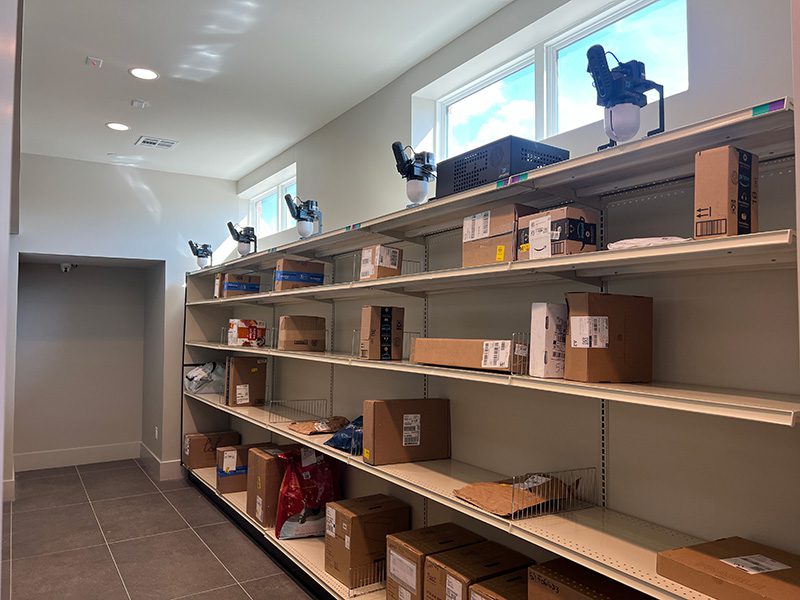
Package management, and its impact on residents’ daily lives, is an underrated operational trend. The Smart Package Room system features an access-controlled room with an open-shelf, open-zone setup instead of fixed locker bays. The result is a secure room that can hold any type or size of package, from a padded envelope to an oversized box.
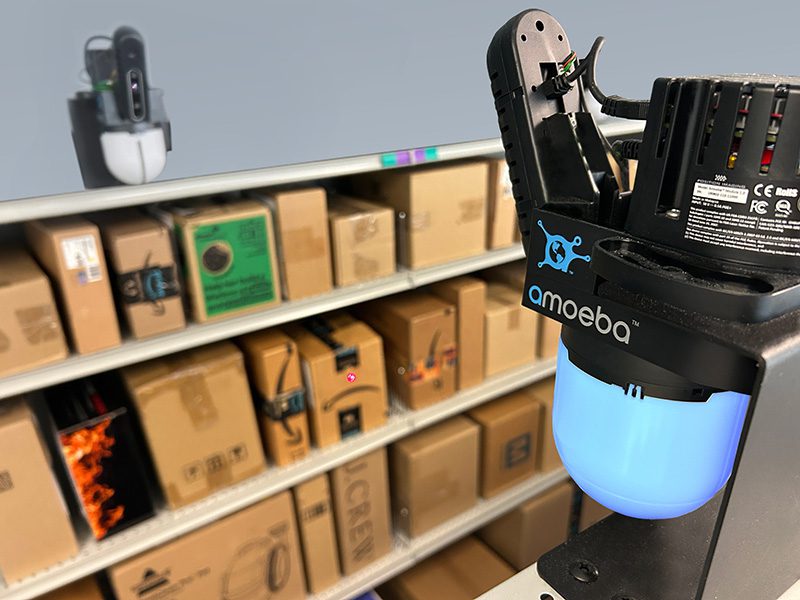
The Amoeba Module tracks exact package location on the standard shelves in real time and logs each one with a timestamp. It then directs residents to their parcels with laser, light, and audio guidance for a fast and secure self-service pickup. That matters because package volume is the front-line operations problem that every director faces, and locker space runs out fast. Open shelving offers higher package capacity in the same footprint, almost three times as many packages, and the digital chain of custody quickly settles disputes from the portal instead of the front desk.
With online shopping showing no signs of abating, package management is now a growing operational demand that touches your residents almost every day. Solving it with effective solutions should always be a budget priority.
4. Resident Experience Platforms: One App for Everything
Residents don’t want separate apps for rent, maintenance, amenities, access, and packages. Resident-experience platforms are driving the trend of consolidating those functions into one login, as opposed to separate apps. A unified interface facilitates resident engagement and gives your team a central hub for property communication.
The strongest platforms act as the property’s connective tissue, pulling in access events, package notifications, and work-order status so a resident never has to search for a specific tool to open. Operators benefit from the enhanced look at resident data. When every interaction flows through one platform, you’ll have a better understanding of which amenities residents use, and which ones they don’t.
Inquire about the depth of integration of every tool that you consider purchasing. A platform that simply places a logo on disconnected tools is adding a layer of access without removing one. This is far from a frictionless experience, as the operations goal is to have fewer apps doing more, with all the tools tied into the systems behind them.
5. Sustainability Tech: Water Leak Detection and Energy Management
Sustainability technology has cemented its place as a required budgetary need for multifamily properties because of their impact on the bottom line. Water leak detection sensors, for example, can catch a slow failure before it becomes an expensive multi-unit insurance claim.
Energy-management systems reduce common-area and vacant-unit consumption automatically, while EV charging is becoming an amenity expectation in many markets. The operational appeal is the same as the rest of these trends, since the technology does the monitoring your staff can’t do around the clock. Leak sensors run quietly until the moment they save you the expense of a flooded floor. Smart thermostats hold vacant units at a sensible setpoint without anyone walking into the building.
Prioritize the sensors that prevent catastrophic costs first, then layer in additional efficiency tools that compound over time. Sustainability tech wins budget approval when you frame it as a risk reduction strategy that will save you money over the long haul.
6. Data Privacy and Cybersecurity: ISO Compliance as Table Stakes
Every connected device or solution on your property expands the data you’re responsible for, so privacy and cybersecurity are just as important as the tools themselves. Residents are increasingly concerned with the data that a building collects, who can see it, and how it’s stored.
ISO 27001 for information security and ISO 27701 for privacy have become the baseline credentials that operators expect before investing in a tool. As an operator you must know how every vendor handles resident data, where that data lives, and how access is logged. A package management or access control system that records resident activity should treat that data with the same rigor as a bank.
Make compliance a standing question in your procurement checklist. The trend here is the standard that you hold every vendor to, and it’s quickly becoming table stakes in the multifamily industry.
Why Package Management Is Moving Up the Priority List
Package management has become one of the leading multifamily technology trends for the simple reason that package volume keeps rising and it touches every resident. The Pitney Bowes Parcel Shipping Index counted 23.1 billion US parcels in 2025, with 31 billion projected by 2031. It’s an acceleration that will see packages entering your lobby in waves from here on out.
Residents are taking notice. Convenient package handling now ranks as a valued amenity in the NMHC and Grace Hill Renter Preferences Survey, which means the resident package experience shapes reviews and renewal decisions. And the implications to a property’s operational costs are just as real. Every package that a staff member logs, stores, and hands over to a resident is front-desk time that doesn’t scale with volume.
System-wide integration will ensure that package management is a resource-saving strategy, not a time-draining tactic. Tie it into your property management system and resident app so that every delivery automatically logs itself, notifies the resident, and clears without so much as a phone call. The Smart Package Room system’s Amoeba Module gives you AI-powered computer vision tracking on the standard shelf, while ISO-aligned data handling keeps the resident records that flow through it secure. The combination of high daily volume, tight integration, and real security advancements is why so many operators are motivated to invest in package technology solutions.
What to Budget and Prioritize in Your 2026 Tech Roadmap
Start your roadmap with an audit. Take stock of your current tech stack and look for redundancies. Make note of hidden inefficiencies, such as the overlapping tools that each do 30% of the same job, the platform that nobody logs into, or the contract that renews on autopilot. With operating costs climbing, leasing expenses rose 4.6% in 2024 to $292 per unit per the National Apartment Association, meaning every duplicate subscription is margin you’re leaving on the table.
Then prioritize by reach. The technology that touches every resident every day, entry access, packages, and payments, to name a few, merits funding before the tool that touches only a handful of people occasionally. This crucial filter should help prevent budget arguments because it contextualizes the conversation through a more subjective operational lens.
Additionally, there are two traps to be wary of when planning your tech budget. First, avoid sunk-cost loyalty to legacy systems. The money you’ve already spent is gone, and keeping a tool because you bought it only compounds the loss. Second, budget for systems integration overhead, regardless of the solutions you plan to invest in. At a minimum, every new platform needs to talk to your property management system. If you account for systems integrations in your plan, your roadmap to the future should remain steady.
Common Multifamily Technology Trends Mistakes
Most multifamily technology trends fail at the critical point of implementation. These four mistakes can cause the most damage to your bottom line. Yet all four are avoidable with a clear procurement standard:
- Buying point solutions that don’t integrate: A tool that can’t share data with your property management system relocates the manual work, so the savings you budgeted never show up.
- Underinvesting in resident-facing technology: Back-office tools are easy to justify, but residents renew based on entry access, package management, and the property app they touch daily. Skimping on these will cost you retention.
- Ignoring data privacy and ISO compliance: Skipping the privacy review to move faster on tech implementation will expose you to long-term exposure, and resident-data incidents are far costlier than time spent on due diligence.
- Failing to train property staff on new tools: The best platform underperforms when staff work around it, so ensure that time and resources will be allocated to staff training.
Get ahead of these four poor outcomes before you sign anything, and your roadmap will deliver the operational lift the multifamily technology trends promise.
Frequently Asked Questions about Multifamily Technology Trends
1. What Are the Most Important Multifamily Technology Trends to Watch in 2026?
The multifamily technology trends with the biggest operational impact in 2026 are AI for operations, smart access control, package management with computer vision tracking, resident-experience platforms, sustainability technology, and data privacy with ISO compliance. The common thread for these themes is reach. Each one touches residents or staff daily and works best when they integrate with your property management system. Prioritize the tools that remove repetitive front desk and maintenance work, because those produce measurable savings. The standalone tool that doesn’t integrate with the larger systems rarely earns its keep, no matter how impressive the demo looks.
2. How Is AI Changing Multifamily Property Management?
AI has moved from unreliable pilots to reliable daily operations. It predicts recurring work orders, routes tickets to the right vendor, and flags units trending toward costly failures before they break. On the leasing side, it drafts listings, qualifies leads, and answers routine resident questions automatically. AI tools support vendor management by comparing bids and tracking which contractors close tickets on time. Functional AI works to remove the repetitive triage that buries staff, so a small team can manage a larger portfolio without falling behind.
3. Is Smart Access Control Replacing Keys in Apartment Buildings?
Smart access control is growing fast, though it hasn’t fully replaced keys yet. Smart-lock adoption has more than doubled, from 7% of units in 2022 to 16% in 2024. Smart access control facilitates instant credential changes, so a move-out no longer triggers a rekey, and a maintenance visit no longer needs a physical key. Most buildings still run a hybrid system of smart and traditional locks today, but the trajectory points toward credential-based entry as the standard for new and renovated communities.
4. Why Is Package Management Considered a Multifamily Technology Trend?
Package management is one of the fastest-rising multifamily technology trends because parcel volume keeps climbing and residents expect fast, secure package pickup. The Pitney Bowes Parcel Shipping Index counted 23.1 billion US parcels in 2025, with 31 billion projected by 2031. That volume floods your lobby and lands at your front desk. Convenient package handling now influences reviews and renewals, and a computer vision-enabled system like the Smart Package Room solution logs each delivery automatically while guiding residents to self-service pickup.
5. What Does Data Privacy Mean for Multifamily Technology Adoption?
Every connected tool you add collects resident data, so privacy is now part of the technology adoption decision process. Residents want to know what’s collected, who can access it, and how it’s stored. ISO 27001 for information security and ISO 27701 for privacy are becoming the baseline credentials operators look for before signing a vendor. Take the practical step of adding data handling to your procurement checklist. Focus on where the data lives, how access is logged, and how the vendor responds to incidents. Treat resident records from access and package systems with the same rigor a bank applies.
6. How Much Should Multifamily Owners Budget for Technology in 2026?
There’s no single percentage that fits every portfolio, so budget by reach rather than by a flat benchmark. Fund the multifamily technology trends that touch residents daily, such as entry, packages, and payments. Be wary of investing in niche tools. With leasing expenses up 4.6% to $292 per unit in 2024, an integrated stack that removes duplicate subscriptions will free up more budget than a flat spending target does. Prioritize integration over point solutions, and plan for connector costs vendors rarely quote.
7. What Sustainability Technology Is Moving in Multifamily?
The sustainability tools gaining the most traction in multifamily are water-leak detection, energy management, and EV charging. Leak sensors catch a slow failure before it becomes a multi-unit insurance claim, which is why they often pay for themselves the fastest. Energy management systems trim common-area and vacant-unit consumption automatically, while EV charging is shifting from a perk to an expectation in many markets. These solutions are more than just green initiatives. Frame these investments as risk reduction and operating-cost control instead of green initiatives. That framing clears budget review faster, since the savings and avoided losses are easy to quantify.
8. Are Smart Home Devices in Apartments Worth the Cost?
Smart home devices are worth the cost when they connect to your resident app and property systems. If they do not easily integrate with existing solutions, then they are far less beneficial. Helpful tools that produce clear savings include smart thermostats that hold vacant units at a sensible setpoint and leak sensors that prevent a flood. The mistake is adding in-unit tools that don’t integrate; these tend to create maintenance overhead without operational payoff. Among the multifamily technology trends, smart devices earn their keep through integration, so evaluate them as part of a connected stack rather than as individual features that residents may never use.
9. What Is the Most Overlooked Multifamily Technology Trend?
Computer vision-enabled tracking systems for package management is the most overlooked multifamily trend. Operators fund access control and resident apps while treating the package room as a storage problem, even though packages reach many residents daily. A computer vision tracking system like the Amoeba Module logs every standard shelf delivery with a timestamp and builds a digital chain of custody, so disputes are resolved quicker and more accurately. That chain-of-custody record is the quiet differentiator, because it turns a recurring front-desk headache into an automated, auditable workflow that scales with rising parcel volume.
10. How Do You Start Adopting New Multifamily Technology Trends in Your Portfolio?
Start with an audit of your current stack to find redundancy and tools that your staff doesn’t use. Then prioritize by reach, funding the technology that touches residents daily before niche solutions. Confirm each new platform integrates with your property management system, and budget for the integrations up front. Finally, train every staff member thoroughly, because adoption is where most multifamily technology trends succeed or fail. If you want help sizing package technology for your buildings, talk to a specialist before your next budget cycle closes.
The Bottom Line on Tech Trends
The multifamily technology trends worth your 2026 budget share one trait: they touch operations every day and integrate with the systems you already run. Keep four priorities front of mind as you build the roadmap:
- AI is operational now, work orders and vendor management are the early wins your team feels immediately.
- Package management is the sleeper trend, rising volume and direct resident impact justify the investment this year.
- Integration beats point solutions, every new tool needs to talk to the property management system or it adds work.
- Privacy is no longer optional, ISO compliance is becoming table stakes for any vendor handling resident data.
Fund the tools that reach every resident and hold every vendor to a clear integration and privacy standard, and your stack will earn back its cost instead of quietly draining it.
If multifamily technology trends are reshaping how you budget for 2026, package management is one of the biggest, and one of the easiest to act on. Talk to a specialist about how the Smart Package Room system fits the rest of your stack, integrates with your property management platform, and absorbs rising parcel volume without adding front-desk hours.