


Disputed deliveries at multifamily properties always begin the same way. A resident reports that a high-value parcel never reached them, yet the carrier’s record shows it was delivered at 2:14 pm. With so many incoming deliveries at the property, staff can’t say what happened between that timestamp and the resident’s phone call. Staff checks the shelves, the resident asks whoever worked the desk, and two days later the property is still negotiating from memory or an incomplete ledger.
Chain of custody for high-value apartment deliveries exists so that conversation never has to happen. A multifamily package delivery solution, one access-controlled room where every parcel gets logged the moment it arrives, converts a disputed delivery into a documented record of receipt.
This article is about creating a system of evidence for all deliveries. It isn’t legal advice, and responsibility for a missing parcel tends to hinge on jurisdiction, lease language, and whether the property accepted custody at all, so those questions belong with your counsel. If you’ve already tightened multifamily lobby management best practices, the custody record is the next gap worth closing, and what follows covers the custody boundary, parcel classes, record fields, retention, and the evidence pack.
What Chain of Custody Means for an Apartment Delivery
Chain of custody in parcel deliveries comes from evidence handling, where an item’s standing depends on an unbroken account of who held it and when. Translate that to a multifamily property and the item is a parcel, the handlers are couriers, staff, and residents, and the account is your log.
Tracking isn’t the same thing and conflating the two costs properties real money. A carrier’s tracking record follows a parcel to your address and stops at the moment of delivery. A custody record starts at that moment and closes when a named resident picks up the parcel. The gap between those two records is where nearly every apartment package dispute lives.
Three handoffs tell the story of a parcel’s chain of custody. Carrier to property, when a parcel crosses from a courier into the building’s control. Property to storage, when it reaches a specific shelf or zone. Storage to pickup, when a resident takes it away. Most disputes sit between the first and the second, in the moments when a parcel is inside the building but not yet logged into a package management system.
Volume sets the scale. The Pitney Bowes Parcel Shipping Index puts US parcel volume at 23.1 billion shipments in 2025, equal to 171 parcels per household per year, and US Census Bureau figures put e-commerce sales at $329.5 billion in the second quarter of 2026, up 12.4 percent from the second quarter of 2025.
Here’s the organizing argument behind chain of custody for high-value apartment deliveries, and it belongs before the details: documentation determines outcomes regardless of who is ultimately responsible.
Where Custody Transfers, and Where It Does Not
Delivered is a carrier status, reflective of the moment when a carrier such as Amazon, UPS, USPS, or FedEx drops off a package somewhere at the property. It records that a driver completed a stop, and increasingly it arrives with a photograph of a lobby floor, a vestibule, or a box propped against a wall.
That photograph alone is a weak record of a parcel’s custody. It proves that a parcel was in a space at a moment. It doesn’t identify who was in that space afterward, and it doesn’t tell the property that a parcel arrived at all, since front desk staff don’t have access to the carrier’s app.
Two workable models exist. In the first, the property accepts custody deliberately at a credentialed delivery point, and the parcel’s acceptance gets logged. In the second, the property doesn’t accept custody, says so plainly in its package policy, and directs parcels to lockers, to units, or to the resident’s own arrangements.
Most properties operate a third model by accident, and it’s the least credentialed of the three. Parcels get accepted informally, stacked behind the desk, and handed over to the resident on recognition, with no record at any point. The property has taken on the practical responsibility without a single piece of documentation that would support it.
Every statement here stays conditional on purpose. Responsibility tends to hinge on whether custody was accepted, what the lease and package policy say, and the jurisdiction. What isn’t conditional is the operational fact. Chain of custody for high-value apartment deliveries begins with this decision, and a property with no acceptance record is in a weak position however the legal question resolves.
Classifying High-Value Apartment Deliveries
Not every parcel deserves the same process. Sorting by value and by item class lets a property concentrate chain of custody for high-value apartment deliveries where a dispute would cost most. Security.org reports that package thieves took $8.2 billion worth of online orders over the past year at roughly $222 per stolen package, and that apartment and condo residents were victimized 3.5 times more often than single-family homeowners.
Set the threshold where replacing an item would require a manager’s approval and apply the tighter process above that line. One rule runs across all four classes below: every hour a high-value parcel sits unclaimed is an hour of exposure, and a 48-hour dwell target from delivery to pickup is a practical operating standard.
Electronics: High Value, High Resale, High Dispute Rate
High-value items such as phones, laptops, tablets, headphones, and game consoles carry the highest combination of value and resale liquidity in a residential building. They’re also recognizable through their packaging, since carrier branding and box dimensions highlight what’s inside to anyone walking past a shelf.
Handling difference: keep them off open sightlines. A zoned shelf out of view of the door, or a separate secured area above the threshold, reduces the likelihood that someone will walk away with the item.
What the record needs beyond a standard entry: the carrier tracking number captured at the door, and a release credential tied to the unit. Electronics disputes often turn on whether the parcel was released to the account holder or to someone else in the unit, and a single transcription error will undo an otherwise sound record.
Jewelry and Small Luxury Goods: Small Enough to Vanish
Small parcels behave differently from every other class. A watch, a ring, or a designer accessory ships in a box that fits in a pocket. Parcels small enough to fit in a pocket can be surreptitiously taken from a room without anyone registering that it moved.
Small parcels are also easily misplaced accidentally. A small box can slide behind a larger one, drop between a shelf and a wall, or get swept up with packing material. Regardless of why it went missing, loss and theft look identical afterward. This is the exact situation a custody record resolves.
Handling difference: assign these a defined position rather than wherever there’s space. A parcel with an assigned position is a parcel whose absence is visible immediately.
What the record needs: a storage location precise enough to search in seconds, and a release timestamp. Many jewelry shipments also require a carrier-level signature, so capture who signed and under what authority, since that signature is the first link in chain of custody for high-value apartment deliveries.
Pharmaceuticals and Medical Supplies: Time and Temperature Matter
This class of delivery introduces a variable the others don’t have, which is that the items inside the parcel degrade over time. Insulin, biologics, and specialty medications arrive with temperature requirements, and a parcel that sits in a warm room for six hours can be ruined even though it was accounted for.
Privacy is a challenge for these kinds of sensitive deliveries. A medication shipment displays resident information on the label, so a shelf in an open sightline is a potential privacy concern.
Handling difference: temperature-controlled items go into the cold storage zone, a built-in refrigeration unit. Perishable parcels go in the unit, never onto a shelf, to preserve their quality.
What the record needs: the zone the parcel entered and the time it entered, so the property can show that a temperature-sensitive item reached the refrigeration unit shortly after arriving at the property. The dwell target should be shorter in these instances, since every hour of delay is more likely to lead to a claim risk that no amount of documentation can reverse.
Perishables and Grocery: Custody Measured in Hours
Groceries, meal kits, and prepared food invert the usual math when delivered to multifamily properties. The dollar value is often modest, and the custody window runs much shorter than traditional parcels, which makes this the class where dwell time is the core problem.
Volume makes it harder. A building with heavy grocery deliveries takes these in daily, usually inside the same afternoon window, and they arrive as bags and insulated totes, not boxes that neatly stack.
Handling difference: cold items go into the refrigeration unit on arrival, and the notification goes out immediately. A resident who learns at 8pm that their groceries arrived at noon will have a legitimate complaint.
What the record needs: arrival time, zone, and notification timestamp together. For this class the notification field carries more weight than any other, because these disputes arise from spoiled food caused by delayed notifications.
The Record Fields That Survive a Challenge
A defensible record will settle, and even prevent, parcel delivery disputes. Here are the fields, each paired with the dispute it settles.
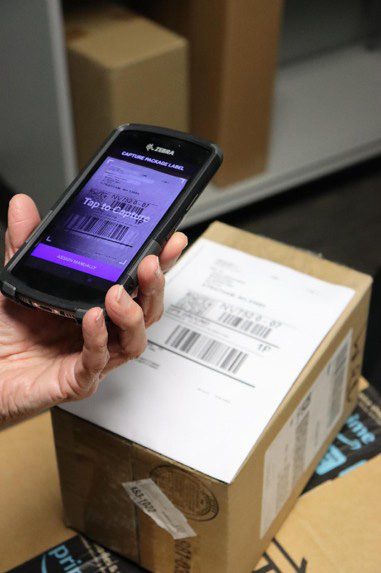
Carrier and driver identifier answers who brought the parcel. Arrival timestamp answers when it entered the building, closing the gap between the carrier’s delivered status and the property’s acceptance of it. Label data captured at delivery answers what specifically arrived. This is where capturing it at the door rather than transcribing it later removes the errors that undo otherwise sound records.
Storage location answers where it went, which allows for easy parcel lookup. Notification sent, with its timestamp, answers whether the resident was alerted to the parcel’s delivery, which decides most delay complaints. Release timestamp answers when it was picked up. The credential used at the parcel’s pickup answers who took it. This is the field that manual processes most often lack entirely.
The Smart Package Room® system produces all of these records with an automated system that doesn’t require additional staff. Couriers and staff capture package label data at delivery with the MobileKiosk™ handheld scanner. Amoeba Module® precision tracking holds each parcel’s location on the standard shelf. Presence sensors monitor personnel in the room 24/7 for security.
Stated precisely: the system’s time-stamped delivery logs establish a verifiable chain of custody by documenting every package’s location from the time it is delivered into the room. The record closes when the resident picks it up.
Missing one field weakens the whole log, because a challenge to chain of custody for high-value apartment deliveries will exploit the weaknesses of any subpar system.
Proof of Pickup: Closing the Record
Parcel pickup is where chain of custody for high-value apartment deliveries either closes or falls apart, and it’s a potential weak link in nearly every manual process. Delivery usually gets logged, because someone is standing there with a stack of parcels and a reason to write things down. When package pickup is not automated, however, there is no guarantee that a valid record will be produced.
The asymmetry between delivery and pickup behaviors is why so many disputes stall. The property can prove that the parcel arrived, but it can’t show what happened to it, which adds to overall confusion about which packages have been picked up and which ones haven’t.
With the automated Smart Package Room, residents access the secure package room with a QR code or a PIN. The credential ties the package’s release to a specific unit and a specific parcel, and it produces an automatic timestamp. That matters more than the strength of the credential itself, since any record depending on staff discipline can degrade during high package delivery volume periods.
Authorized third parties need a decision in advance so they understand the package pickup protocol. A partner who isn’t on the lease, a housekeeper, a family member collecting a gift: these kinds of visitors arrive constantly, and a property that improvises its pickup procedure produces an inconsistent record. Decide who may collect on a resident’s behalf, how that authorization is granted, and how it’s logged. Then, enter that information into the Smart Package Room portal so access will be granted.
Add a verification step above your value threshold. Residents accept it when the reason is explained, and that extra field is usually the one that resolves a high-value dispute.
Retention: How Long to Keep the Record
Two key periods of time matter when it comes to maintaining secure parcel records at multifamily properties. The hold window is how long a parcel stays in the room before the property acts on it. The retention period is how long the record survives after the parcel has been picked up.
Retention determines whether chain of custody for high-value apartment deliveries still exists when staff or a resident asks for it. With residents shopping online now more than ever, disputes may surface late. A resident may notice a charge months afterward, an insurer could open a subrogation file, or a claim arrives after the resident has moved out. Even if the parcel was retrieved after 48 hours, questions about it may arrive much later.
Set the period that makes sense for your property. Work from the longest realistic claim window in your jurisdiction, confirm the number with counsel and your insurance carrier, write it down, and apply it consistently across properties.
Two failure modes account for most of the trouble. The first is a short default retention that no one chose. This is usually a vendor setting, which quietly deletes the record that would have resolved the dispute. The second is keeping everything indefinitely with no policy at all, which creates its own exposure and makes the eventual cleanup arbitrary.
A documented period you can explain beats both, and will reduce future parcel disputes.
How Package Loss Interacts with Insurance
The coverage boundary is simpler than most operators expect. A resident’s parcel is the resident’s personal property, so a stolen package generally falls under their renters insurance rather than on the building’s property policy. Coverage, deductibles, and exclusions vary by policy, and your carrier or broker is the only reliable source for what yours does.
The part that tends to get missed is owner exposure, which runs on a different track. It shows up as goodwill replacements issued to keep a resident calm, staff hours spent reconstructing deliveries, disputes that turn into reviews, and residents who don’t renew. Those factors may not reach a property claim, but they do affect the operating statement.
Scale the exposure honestly and note that the published counts can disagree as much as the values do. The USPS Office of Inspector General recorded at least 58 million packages stolen in the United States in 2024. SafeWise put the 2025 count at 104.3 million packages at an average value of $143. Security.org puts the average stolen package at $222.
For anything policy-specific, go to your carrier. These recommendations don’t characterize coverage as a rule, and chain of custody for high-value apartment deliveries is just an evidentiary tool.
The Evidence Pack: What You Produce When a Claim Lands
The evidence pack represents chain of custody for high-value apartment deliveries at the moment it gets used. When a dispute arrives, run a sequence to get to the bottom of it.
Acknowledge it the same day, in writing, with a stated timeframe for the answer. Pull the parcel record: delivery, storage location, notification, and pickup. Pull the access record for the same window, covering who entered the room and when. Reconcile the two, then respond in writing with what the records show.
Reconciliation is where the evidence pack gets its strength. One record says a parcel released at 6:42 pm on a resident’s credential. The other says the room door opened at 6:41 pm on the same credential. Two independent systems, built for different reasons, so agreeing on a timeline is far harder to dispute than any single log. Pickup reconciliation depends on access control, package management software, and the parcel record sharing information, so check the supported integrations before assuming the two can be read together.
Commit to a response standard and hold it regardless of the outcome: a written summary of what the records show, delivered inside the timeframe that you stated.
A prompt, documented response will begin to defuse a dispute even when the parcel is missing, because the resident is usually reacting to being ignored rather than to the loss itself.
Writing the Policy Down
A package policy should answer five key questions.
The policy should state whether the property accepts custody of parcels and at what point, how long the hold window runs before the property acts, how a resident picks up a parcel and which credential is required, who else may collect on a resident’s behalf and how that is authorized, and what happens, step by step, when a parcel can’t be located
Writing it down changes outcomes for a reason that has little to do with the wording. A documented policy applied consistently is evidence of a reasonable process, and it facilitates chain of custody for high-value apartment deliveries. An inconsistent policy can quickly turn one missing parcel into an argument about how the building operates generally.
Be sure to clearly communicate your property’s policy. A policy that residents have never read will not reduce disputes. Cover it at move-in, post it in common areas, and repeat it seasonally ahead of the heaviest delivery periods.
Frequently Asked Questions About Chain of Custody for High-Value Apartment Deliveries
1. What Is Chain of Custody for High-Value Apartment Deliveries?
Chain of custody for high-value apartment deliveries is the documented sequence showing where a parcel was, who handled it, and when, from the moment it enters the property until a named resident picks it up. Carrier tracking is a separate record that ends when a package is delivered. The high-value case warrants a tighter version of the same log, usually an extra verification step at release and a shorter dwell target, because an unanswerable dispute costs more.
2. Is the Property Responsible for Stolen Packages?
Responsibility tends to hinge on whether the property accepted custody of the parcel, what the lease and any package policies say, and the jurisdiction. The practical consequence sits apart from the legal one. A property with no record is in a weak position whichever way the legal question resolves, because it can’t show what happened. This isn’t legal advice, and the question ultimately belongs with your own counsel.
3. Does Renters Insurance Cover Stolen Packages?
A resident’s parcel is their personal property, so it typically falls under their own renters policy, not the building’s coverage. Deductibles, limits, and exclusions vary enough that no general statement holds, and the resident’s insurance carrier is the only reliable source for what a given policy covers. SafeWise puts the average stolen package at $143 in 2025. Operators should understand the boundary regardless, since it will shape how a dispute unfolds. A resident who can claim on their own policy behaves differently from one who can’t.
4. What Should an Apartment Package Log Record?
A log supporting chain of custody for high-value apartment deliveries records the carrier, the arrival timestamp, label data captured at delivery, the storage location, the resident notification, the release timestamp, and the credential used at release. Pair each field with the dispute it answers for the full picture. The release fields are usually skipped by manual processes, which is why so many disputes can’t be settled at all.
5. How Long Should a Property Keep Package Records?
Consider two different timelines. A hold window is how long a parcel stays in the room. A retention period is how long its record survives afterward. Set retention against the longest realistic claim window in your jurisdiction, confirm the number with counsel and your insurance carrier, then apply it consistently. The most common failure is a short default schedule, which deletes the record that can be used in a future dispute.
6. Should High-Value Packages Be Handled Differently?
Set the threshold for when replacing an item would need a manager’s approval, and tighten the process above that line, since that’s where chain of custody for high-value apartment deliveries earns its cost. What tightens: an additional verification step at release, a shorter dwell target, and a separate handling area where the item class calls for it. This extra step is critical because Security.org found that apartment and condo residents are victimized 3.5 times more often than single-family homeowners.
7. What Is the Difference Between Package Tracking and Chain of Custody?
Carrier tracking records a parcel’s journey to your building and stops at delivered. Chain of custody records what happened inside the building afterward and ends when a named resident takes it. Nearly every apartment package dispute lives in the gap between those two records, which is why a property can’t lean on the carrier’s log to resolve an internal question. The carrier’s record answers whether the parcel arrived, not where it went next.
8. Can Access Control Logs Help Resolve a Package Dispute?
On its own, an access record proves that a door opened on a credential at a particular time. Alongside a parcel record it proves considerably more, because when two independent systems agree on a timeline it’s much harder to dispute than a standalone log. Reconciling the release timestamp against the door event is chain of custody for high-value apartment deliveries in practice. Treat both as evidence rather than as a conclusion about responsibility.
9. How Do You Handle a Package That Cannot Be Located?
Run a sequence. Acknowledge the report the same day with a stated timeframe, pull the parcel record and the access record for that window, reconcile them, and search the physical zones including oversized and cold storage. Then respond in writing with what the records show. Commit to that written response whatever the outcome. Speed of response shapes the resident’s reaction more than the outcome does, which can be critical when dealing with parcel disputes.
10. Should a Package Policy Be Part of the Lease?
Where the policy lives is a question for your counsel, so the useful answer is what it should address: whether the property accepts custody, the hold window, the release method, who else may collect, and the missing parcel process. Consistent application matters more than placement, since an inconsistently applied policy undercuts chain of custody for high-value apartment deliveries wherever it’s filed. This isn’t legal advice.
The Bottom Line
Documentation determines outcomes regardless of who is technically responsible. That’s the whole argument behind chain of custody for high-value apartment deliveries. It’s why an hour spent on your record fields returns more than an hour spent debating where responsibility lands.
The fundamentals to remember:
- The record decides, because a documented process resolves disputes that an opinion about responsibility cannot.
- Custody starts at delivery, so the handoff from carrier to property is the moment worth capturing.
- Classify by value, since the higher-value parcels most likely to be disputed deserve a tighter process than the rest.
- Close the loop at release, as a delivery log without a release record leaves the most common dispute unanswerable.
- Decide retention deliberately, because a claim can arrive long after the resident has moved out.
Start with what your process captures today. Walk us through your current log, your release method, and your retention setting, and we’ll show you where your chain of custody for high-value apartment deliveries would break down in a dispute and what the record looks like when it’s produced automatically. Request a consultation today to see where your record stands.