
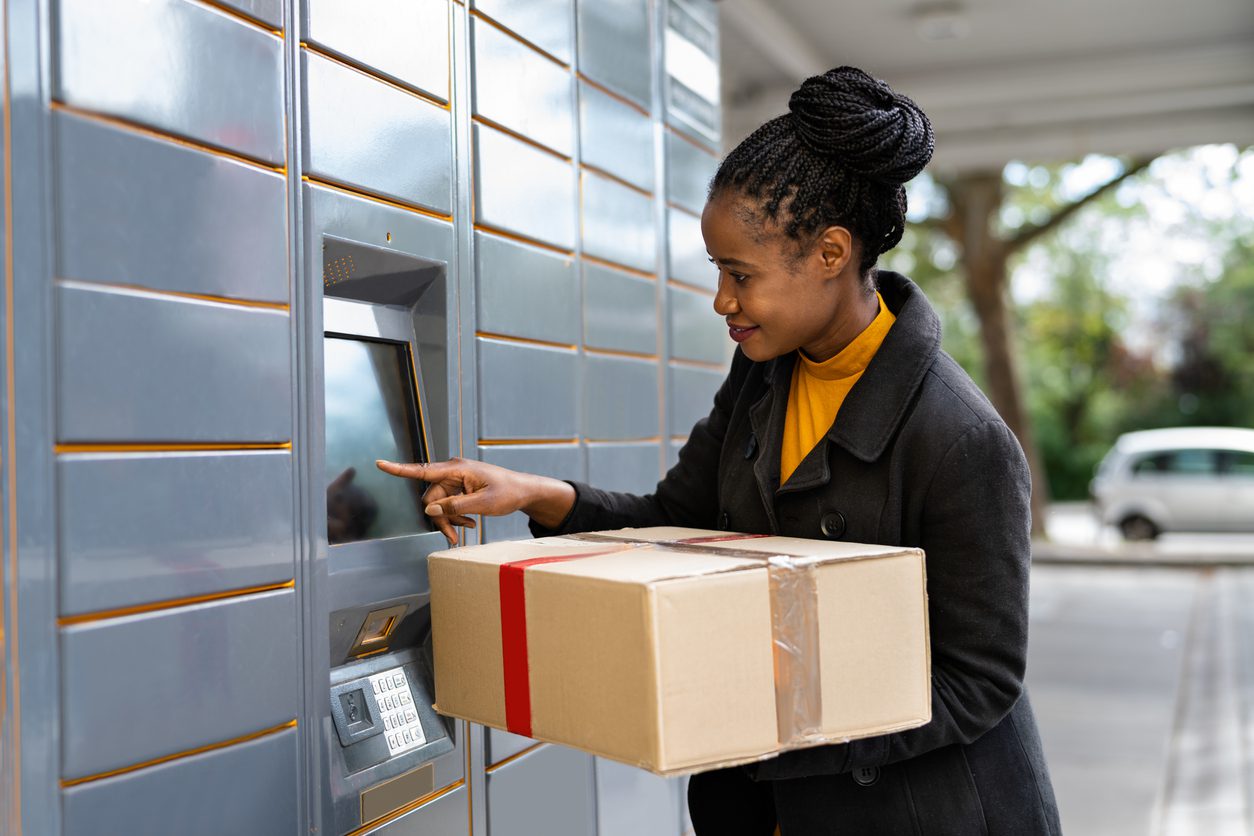

Walk into the lobby of any large multifamily property during a busy delivery week, and the picture is familiar. Packages are stacked on counters, crowding hallways, and piling up behind the front desk. The USPS processes 23.9 million packages a day, and your property absorbs its share. Understanding why package lockers fail in large apartment buildings is the first step toward building a package management infrastructure that works.
This blog explores how to upgrade your multifamily package delivery solution and covers the most forward-thinking options. We examine the delivery volume realities that expose locker limitations, and explore why peak delivery periods serve as the ultimate infrastructure test. Read on to learn how a frictionless resident experience can deliver real-world results at scale.
How Growing Delivery Volumes Expose Locker Limitations
Online shopping continues to accelerate. U.S. retail e-commerce sales hit $316.1 billion in the fourth quarter of 2025 alone, accounting for 16.6% of total retail sales. Every dollar spent online becomes a parcel on someone’s doorstep. Or in the case of multifamily properties, those parcels arrive in the lobby.
Those numbers translate directly into daily operational pressure for multifamily properties, many of which utilize parcel lockers to manage incoming packages. However, consider what locker capacity means in practice. When 200 daily packages arrive at a property and there are only 100 locker compartments, that means that more than half of the packages are left unsecured.
Thankfully, better package management solutions exist. You can reclaim common areas and empower your team by upgrading to a higher-capacity solution. Understanding locker capacity limitations is the foundation for every smart infrastructure investment that follows.
Package Locker Challenges in High-Rise Apartments
High-rise communities face package management challenges that go beyond those of garden style or low-density buildings. Higher delivery volumes, limited staging space, and rigid locker infrastructure can turn package management into an operational risk:
- Volume versus fixed capacity: In a 500-unit high-rise, your residents are ordering everything from daily essentials to oversized furniture. A fixed locker bank can’t flex to match that range, leaving couriers and staff to improvise with whatever space is available. This improvisation can lead to unsecured items, misplaced parcels and cluttered lobbies.
- Physical footprint constraints: Traditional locker banks take up a large amount of floor space relative to the number of parcels they hold. In urban high-rises, that square footage often has higher-value uses. Dedicating it to infrastructure that can’t flex with demand is a hard trade-off when you are already working with tight layouts.
- Lack of scalability: Adding capacity to a locker system typically means purchasing an entirely new bank, along with the installation time and cost that come with it. The set up provides no way for you to scale up during seasonal spikes, or scale down when volume normalizes. The infrastructure stays fixed even when demand fluctuates.
- Handling varied parcel sizes: Modern residents order everything from standard parcels to oversized deliveries, cold storage, and dry cleaning. The ability to handle diverse package types and sizes is a practical differentiator that residents notice when choosing where to live.
Oversized Parcel Challenges in High-Density Properties
Residents order furniture, fitness equipment, and bulk household supplies at scale, and these parcels that don’t fit into a traditional fixed-compartment locker need to go somewhere secure. In many high-rise buildings, that means oversized deliveries end up in unsecured lobbies, hallways, or makeshift staging areas. That exposure increases the risk of theft and damage.
The annual security.org report noted residents in apartment buildings are 3x more likely to experience package theft than homeowners. A system that handles every size and keeps your operations running smoothly is non-negotiable.

How Peak Delivery Periods Expose Infrastructure Gaps
The reasons package lockers fail in large apartment buildings become glaringly visible during peak delivery periods. Seasonal spikes put your multifamily package management system to the test, revealing how well your infrastructure performs. Here’s what those pressure points can look like from a volume surge and courier workflow perspective.
How Do Seasonal and Sales Surges Reveal Infrastructure Capacity in Real Time?
Consider one of your 200-unit buildings during November and December. Your daily parcel volumes can double or triple compared to a quiet January week. Properties relying on fixed locker banks can experience delivery surges that create package overflows within days. These last-minute delivery multifamily challenges peak precisely when your resident expectations are highest. Several seasonal and sales patterns consistently drive surges:
- Holiday shipping windows: Online holiday sales accounted for more than 70% of Q4 2025 e-commerce volume. Your multifamily property absorbs that surge directly.
- Back-to-school and move-in periods: Late summer and early fall bring a surge in delivery demand as residents restock, furnish new units, and set up households.
- Cyber Monday and sales events: Single-day retail events generate a sustained delivery surge that ripples through your multifamily properties for days after discounts end.
An open-shelf, open-zone system with higher package capacity can effectively absorb these surges. Scalable infrastructure can withstand seasonal surges and provide relief to everyone involved during busy periods.
How Does Courier and Staff Workflow Efficiency Depend on a Reliable Infrastructure?
Couriers and staff complete deliveries faster when package rooms offer clear, guided delivery workflows. Every smooth delivery starts with a system that makes the courier’s job straightforward.
You can create an efficient workflow for couriers and staff by using the MobileKiosk™ handheld service. When a courier uses the MobileKiosk handheld to quickly capture package label information, the system creates a time-stamped record that documents the package’s location and establishes a chain of custody the moment a package enters your package room.
When your package infrastructure streamlines the last foot of a delivery, your couriers complete stops faster and your residents benefit from more efficient delivery routes. Your residents need a reliable system that keeps deliveries moving and makes package pickup a breeze. Set a strong operational foundation that positions your property to adapt, evolve, and confidently support what comes next.
How Multifamily Housing Avoids Failure by Deploying Smart Package Locker System Alternatives
Package lockers fail where open-shelf, open-zone models become the answer for large apartment buildings. That means every delivery is accounted for and every pickup runs smoothly, giving your residents confidence in the system from day one.
Forward-thinking operations managers streamline their processes by moving beyond rigid locker systems and embracing solutions that adapt in real time. The results speak for themselves. Fewer delays. Better access. Stronger satisfaction. Follow what works, and you can create a foundation for a truly seamless residential experience.
How a Smart Package Room System Creates a Frictionless Resident Experience
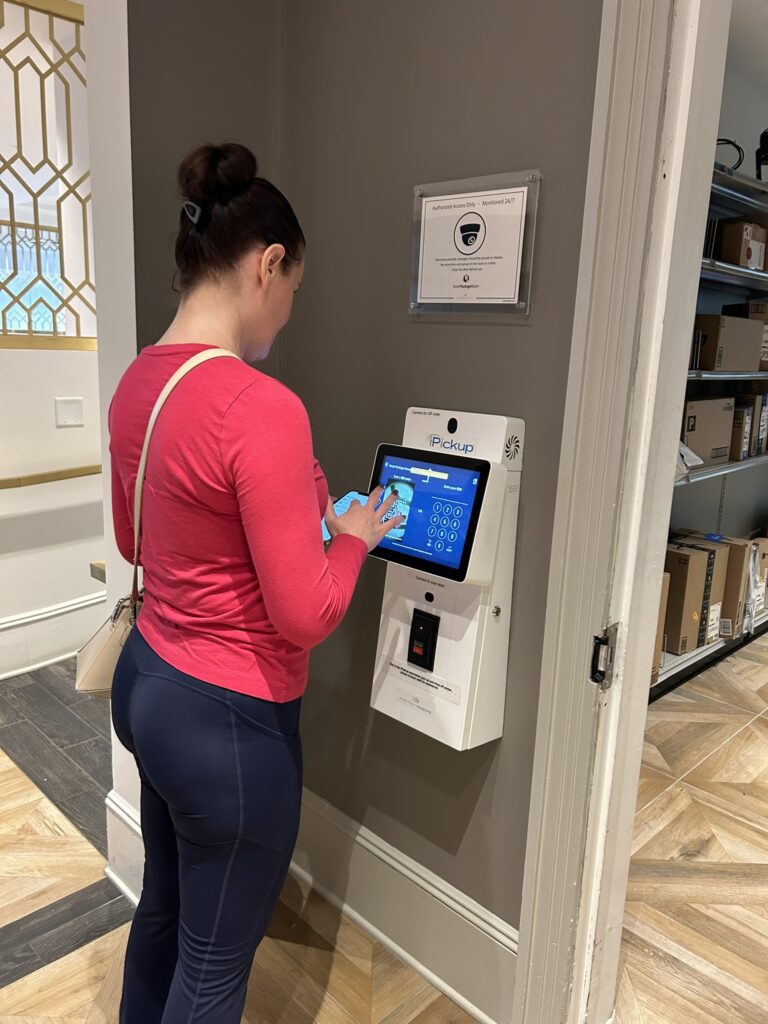
Your residents expect equal speed and clarity from their package rooms and retail apps alike. Open-shelf, tech-enabled systems deliver that experience through a guided, step-by-step process that takes seconds, with maximum efficiency and minimal staff involvement required.
Your large apartment building needs infrastructure that keeps up. Two core technologies power the experience: the Amoeba Module, which uses computer vision and laser guidance technology to locate and track parcels on the shelf; and the MobileKiosk, which captures package label information and logs every delivery on arrival. Together, they handle your package management from drop-off to pickup:
- Notify the resident: An automatic text or email will confirm that the parcel is ready to pick up.
- Grant kiosk access: Residents scan their QR code or enter a PIN at the external kiosk to enter the secure package room.
- Direct with laser guidance: The Amoeba Module uses light and laser guidance to pinpoint the parcel’s exact location on the shelves and guide residents to it.
- Map oversized and specialty areas: A room map highlights the general area for flat, oversized, cold storage, and dry cleaning parcels, supported by audio guidance.
- Confirm the pickup: The system registers a successful retrieval and repeats the process for any additional parcels.
These core operational principles are already helping high-volume apartment buildings run smoother pickups every day.
What Real-World Results Look Like at Scale
At Stuyvesant Town, an 11,200-unit community in Manhattan, the open-shelf, open-zone model reduced package management staff from twelve full time associates to only two. That outcome is proof that the system performs at the largest possible scale.
That same efficiency scales to different property types. The Dime in Brooklyn, New York, implemented open-shelf systems to deliver consistent performance in their community. Package pickup dropped to under 20 seconds, and the property can now scale without adding a single piece of hardware.
Whether your property has 100 or 1000 units, the open-shelf model adapts to your footprint and your volume. A typical installation takes only a few days to streamline your package room. Staff receive thorough training, so your team is confident before the first resident uses the new system. Properties of every size and profile can make the move.
Choose a Future-Ready Package Management Solution
Your package room should work as hard as the rest of your property. Open-shelf, open-zone systems accommodate modern parcel dimensions, ensuring your infrastructure delivers under pressure.
The right solution scales across all parcel sizes and types without additional hardware and minimal staff intervention, delivers precise tracking technology with time-stamped delivery logs that establish a verifiable chain of custody, and absorbs seasonal surges without requiring additional staffing.
Ready to upgrade your package infrastructure? From 11,200-unit communities to boutique reuse developments, our Smart Package Room platform delivers. Schedule a consultation with our team to explore how the open-shelf model can transform your property’s package management at any scale.
Frequently Asked Questions
Package management raises questions that go beyond daily operations. Here are answers to what multifamily operators ask most.
How Much Staff Time Does a Smart Package Room System Save?
Manual package management duties consume more staff hours than most operators realize. At Stuyvesant Town, an 11,200-unit community in Manhattan, the Smart Package Room system reduced the package management team from twelve full-time staff members to two. By automating intake, precision tracking technology, and resident notifications, the system gives your team hours back every week to focus on leasing, resident engagement, and property operations.
Are Open-Shelf Smart Package Room Solutions More Environmentally Sustainable Than Locker Systems?
Fewer failed deliveries mean a lower overall last-mile carbon footprint. Open-shelf, open-zone systems use significantly less steel, consume less energy with no per-compartment electronics, and eliminate package overflows that force redelivery trips.
Can a Smart Package Room Solution Increase Property Value?
Package management has moved from a luxury amenity to a non-negotiable infrastructure. Residents increasingly factor parcel security into their housing decisions, and many are willing to pay a premium for it. That added income compounds at standard cap rates, creating a meaningful lift in overall property valuation.