
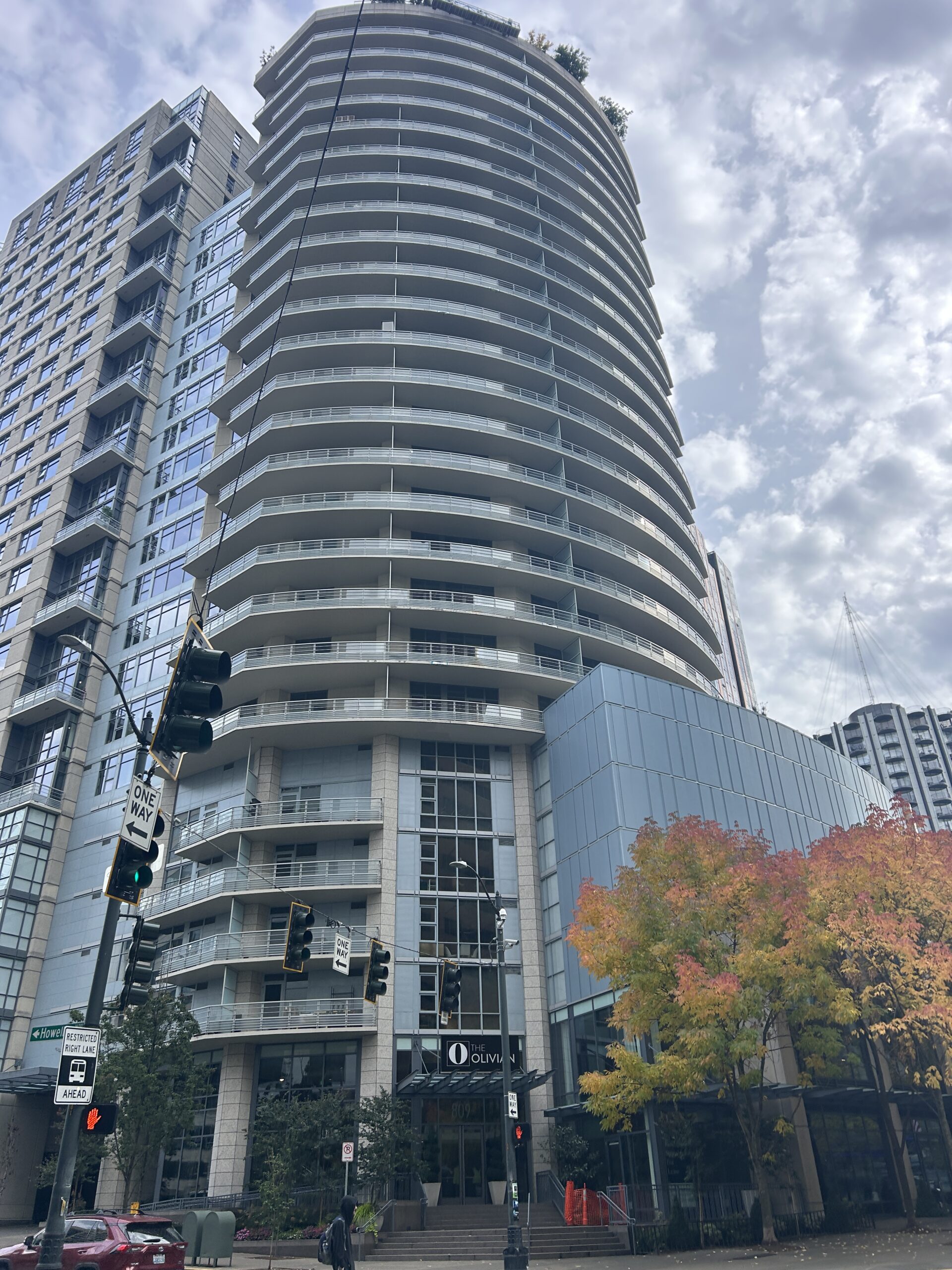

In a high-rise residential building, package and mailroom service affects hundreds of residents in a densely crowded area every single day. When packages pile up, notifications are delayed, or pickup processes aren’t clear, this results in complaints, frustrated residents, and added pressure on property staff who are busy juggling responsibilities. That’s why operations teams are actively looking for ways to improve mailroom service without adding more labor or expanding physical space.
The challenge is that most easily accessible advice online focuses on corporate offices, not high-density apartment buildings where hundreds of residents rely on a single mailroom for mail and package pickup.
High-rise mailroom management comes with very different realities: vertical delivery logistics, limited storage space, and rising expectations from residents who expect fast, reliable package handling. With the average American receiving 66 parcels in 2024, and the average household receiving 167 packages every year, implementing the right Multifamily Package Delivery Solution can dramatically improve apartment mailroom operations while reducing the daily workload for onsite teams.
In this guide, we’ll break down five practical ways to improve mailroom efficiency in high-rise buildings, along with the systems and processes that help operations managers deliver faster, more reliable service without increasing staff time.
Why High-Rise Mailrooms Are Different
High-rise properties operate under a completely different set of constraints than corporate offices, which is why high-rise mailroom management best practices require their own strategy. In many apartment towers, 100 to 500+ residents rely on a single delivery space, creating far more daily volume per square foot than most office mailrooms ever see. That density is why on-site staff efficiency in multifamily towers cannot be planned from unit count alone.
High-rise properties contain more units than corporate offices, which means more residents and significantly more deliveries. Package hauls at high-rise properties have been increasing for years, with couriers from Amazon, UPS, USPS and FedEx arriving with oversized tote bags full of small and medium sized packages. They bring in larger packages on dollies and flatbed carts with wheels. If these properties rely on traditional package management systems, they will need additional staff to manage the flow of incoming deliveries, sort packages and communicate to residents when they can pick them up.
Another key difference between high-rise apartments and smaller ones is vertical distribution. Unlike low-rise communities where carriers can leave packages at unit doors, package delivery in large apartment buildings works most efficiently when it is centralized. That means every delivery flows through one room, with one workflow that is easy for staff and couriers to use. Without a system designed specifically for multifamily environments, small inefficiencies quickly turn into daily bottlenecks.
Finally, resident expectations are higher than ever, especially in luxury and high-rise communities. Residents expect fast notifications, organized pickup, zero gatekeeping, and minimal wait times. This puts constant pressure on multifamily mailroom service to operate more like a customer experience function than a basic delivery area.
5 Ways to Improve Mailroom Service
If you want to improve multifamily mailroom service in a high-rise building, the biggest gains don’t come from one small fix. They come from improving the full workflow. The strategies below focus on how to improve mailroom efficiency, reduce daily friction for staff, and deliver better mailroom service to residents without increasing labor hours. When applied together, these changes can dramatically improve apartment mailroom operations in even the most densely populated high-rise properties.
1. Centralize All Deliveries
One of the fastest ways to improve high-rise apartment mailroom management is to create a single, secure location where all deliveries occur. When packages are left in multiple areas — front desks, leasing offices, hallways, and temporary holding areas — tracking becomes inconsistent, staff spend more time managing the inflow of packages, and packages can be exposed to theft. Prevention is key, considering that 37 million packages were stolen in 2025, for a loss of almost $8 billion in merchandise.
A centralized approach supported by an apartment package management system gives couriers clear instructions, creates a consistent workflow for staff, and makes it much easier to improve mailroom operations over time. Just as importantly, it reduces misplaced packages, cuts down on resident complaints, and deters theft.
2. Automate Resident Notifications
Manual notifications are a big reason that high-rise buildings struggle to improve mailroom service. When staff members have to send emails, make calls, or notify residents in person for every package, delays become inevitable.
A modern package notification system for residents solves this instantly. Automated alerts with clear pickup instructions — and even package-location images — remove confusion and reduce follow-up questions. For properties looking at mailroom automation for apartments, this step alone can significantly improve mailroom efficiency while reducing daily workload for onsite teams.
3. Implement Clear Pickup Policies
Even well-organized mailrooms become overwhelmed without a consistent resident package pickup process. If packages sit for days, space fills quickly and it becomes harder to reduce package clutter in apartment mailrooms.
Setting a clear holding period and communicating it to residents consistently is one of the simplest ways to improve mailroom efficiency. Residents understand expectations, staff spend less time managing overflow, and the room stays organized even during high-volume delivery periods. Over time, this small policy change can make a major difference in how efficiently the entire system operates.
4. Coordinate with Front Desk Staff
Front desk teams play a major role in apartment mailroom operations, especially in high-rise buildings with concierge service. If staff aren’t trained on package delivery and pickup or don’t feel confident answering questions, small issues quickly turn into daily disruptions.
Training teams on resident package management, common pickup questions, and how to support couriers using the system helps create a smoother experience for everyone. Strong coordination between the mailroom and front desk is essential if you want to consistently improve mailroom operations in high-rise buildings.
5. Optimize Physical Space
Even the best package delivery workflow for multifamily buildings can only work if the space itself is optimized for high-volume deliveries. In buildings dealing with high-density apartment package management, the layout of the room matters just as much as the process.
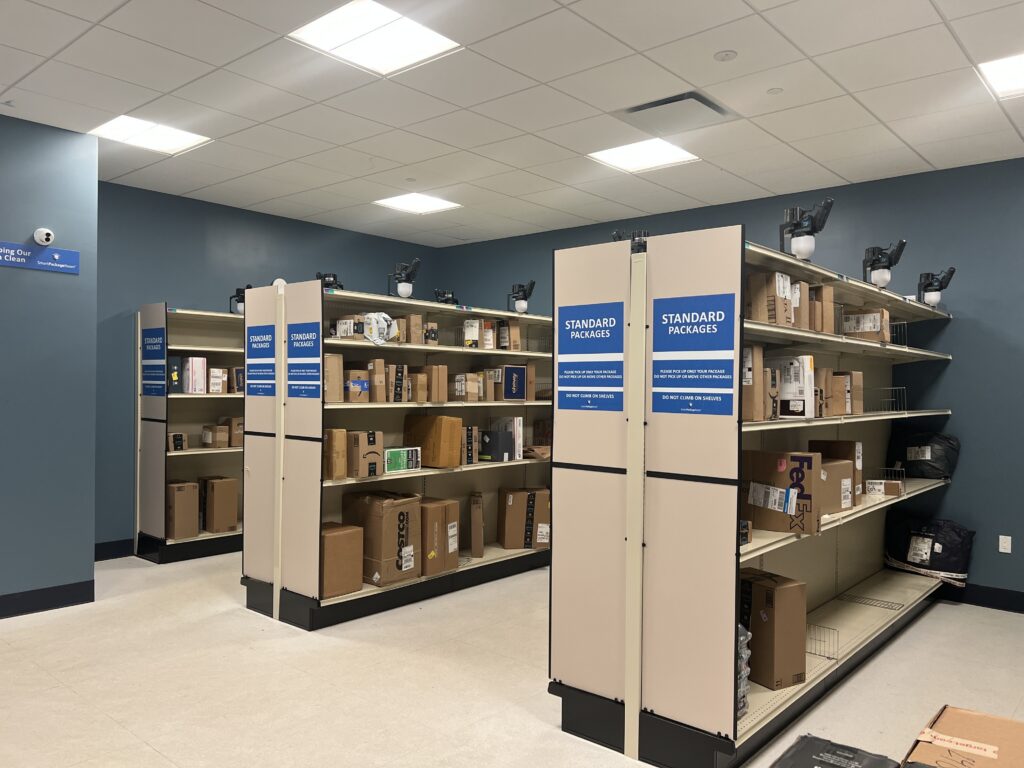
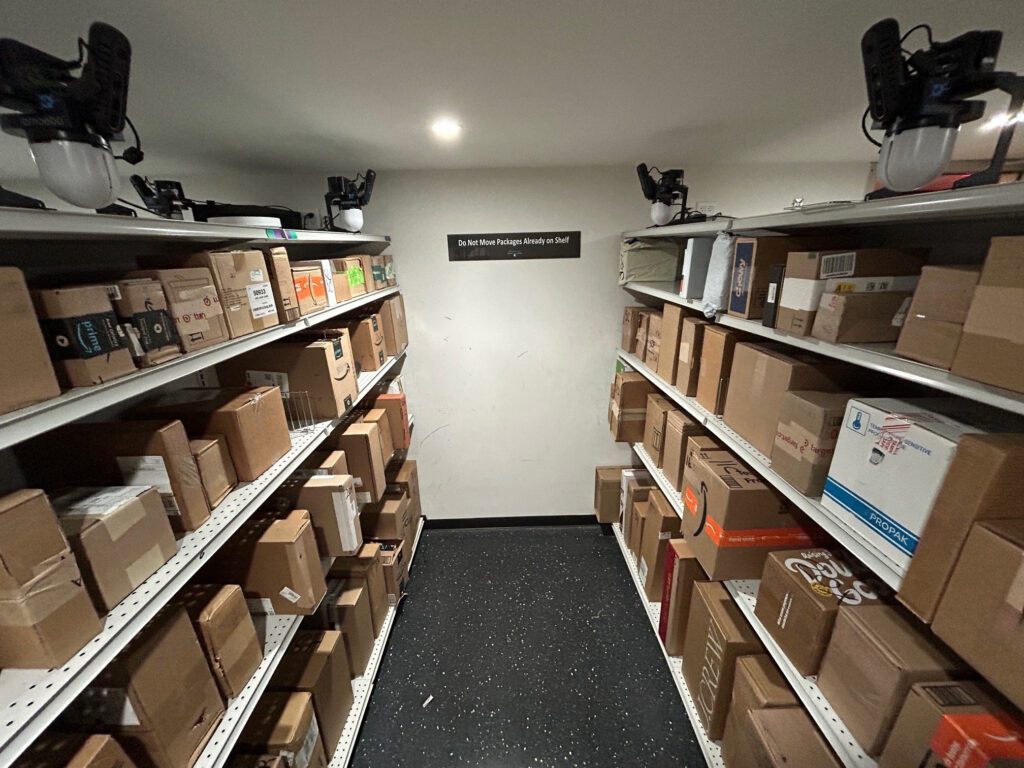
A well-designed package room should include access-controlled entry, vertical shelving to maximize space, and clearly defined zones for oversized items, flat packages, refrigerated deliveries, and dry cleaning. Designing the package room this way improves mailroom service over the long term by creating a space that’s more efficient, better organized, and easier for residents to navigate and use.
Technology Options for High-Rise
Technology plays a much bigger role in high-rise properties than it does in smaller communities. When buildings reach 100 units or more, manual processes buckle under the pressure of daily package delivery volume. This is why many operations teams turn to high-tech solutions like the Smart Package Room system instead of relying on traditional storage methods. These systems are designed specifically for high-density residential environments and can significantly improve how an apartment package management system functions day to day.
For large buildings, a centralized digital intake system makes it easier to track deliveries, automate notifications, and keep packages organized without increasing the burden of package management on staff. That’s why many high-rise properties now view a package delivery solution for multifamily as a core operational tool rather than an optional amenity.
Lockers can still work in lower-volume buildings, but they often struggle in true high-rise environments where oversized packages and daily delivery spikes are common. In those cases, mailroom automation for apartments typically needs to be more flexible — which is why access-controlled package rooms tend to scale better as delivery volume grows. This capability will be key moving forward, seeing that by 2028, projections indicate that just shy of 500 billion packages will ship globally.
Measuring Service Improvements
Tracking mailroom performance metrics is key to improving mailroom operations in multifamily buildings. Focus on complaints, package dwell time, and front desk inquiries to identify bottlenecks and inefficiencies. These insights help property teams pinpoint where residents experience delays or confusion, and allow for targeted improvements.
Leveraging package management analytics makes it easier to see trends, like peak delivery periods or frequent oversized packages, so adjustments can be made before issues escalate. By acting on this data, teams can improve mailroom efficiency, reduce errors, and enhance the overall resident experience. Regular monitoring ensures that the system continues to deliver smooth, reliable package handling while providing measurable proof of operational improvements.
For a more detailed overview of how to measure the operational improvements of a Smart Package Room system, check out our Operations Manager’s Practical Guide.
Frequently Asked Questions about Implementing Better Mailroom Service in High-Rise Buildings
1. How can I improve mailroom efficiency in a high-rise apartment building?
Improving mailroom efficiency starts with centralizing all deliveries, automating resident notifications, and setting clear pickup policies for residents. Leveraging a digital apartment package management system also helps track packages, reduce errors, and streamline daily workflows, making operations more reliable for both staff and residents.
2. What are the key mailroom performance metrics I should track?
Track complaints, package dwell time, and front desk inquiries to identify bottlenecks. Using package management analytics provides insights into delivery patterns, peak volume periods, and recurring issues, allowing you to make targeted improvements and continually enhance mailroom operations.
3. Can technology really improve mailroom operations in high-rise buildings?
Yes. Systems like access-controlled package rooms or digital lockers help automate notifications, organize deliveries, and scale operations for high-volume buildings. These tools reduce staff workload, improve resident satisfaction, and provide measurable proof of service improvements over time.
4. How do I reduce package-related complaints from residents?
Establish clear pickup policies, provide consistent resident communication, and enable efficient workflows. Centralizing deliveries, automating alerts, and optimizing package room layout helps reduce delays and confusion, ensuring residents have a smoother, faster package pickup experience.
How to Improve Mailroom Service in High-Rise Buildings
Delivering better mailroom service in high-rise buildings requires a holistic approach. Centralizing all deliveries, automating resident notifications, implementing clear pickup policies, coordinating with front desk staff, and optimizing physical space all work together to streamline apartment mailroom operations. When these strategies are combined, they don’t just reduce errors—they transform the resident experience, cut complaints, and make daily workflows more efficient.
Operations teams looking to improve mailroom service will see the greatest results by implementing these strategies as a unified system. Upgrade to a Smart Package Room system today to improve mailroom service, streamline apartment mailroom operations, and reduce errors in multifamily high-rise package management—all while saving staff time and improving resident satisfaction.