


By noon, your package room is already full. Delivery drivers are still arriving, packages are stacking up in the lobby, and residents are starting to complain. If you’re dealing with a package room overflowing situation, you’re not alone.
Multifamily apartment communities across the country are facing record delivery surges driven by eCommerce growth. The trend is not subsiding. In 2024, online sales surged again, with Statista reporting a 9.5% increase in retail eCommerce sales year-over-year. The challenge isn’t just volume, it’s how to fix an overrun package room before it disrupts daily operations.
While a long-term Multifamily Package Delivery Solution takes time, property teams need immediate relief when an apartment package room overflow hits. Implementing automation and redesigns, for example, requires detailed planning.
In this guide, we’ll walk through quick, practical fixes you can implement today, this week, and this month to reduce package buildup, improve resident pickup, and regain control of your space during high delivery volume periods.
Why It’s So Hard to Fix an Overrun Package Room
A package room overflow rarely happens for just one reason—it’s typically the result of multiple operational pressures compounding at once. One of the most common drivers is resident pickup delays, where packages sit for days and increase overall package dwell time. At the same time, many properties face package room capacity issues because delivery volume has outgrown the original room design and storage limitations.
Seasonal spikes only make things worse, as peak season overflow during holidays or move-in periods flood already constrained spaces. Without a clear overflow protocol in place, these factors quickly escalate into a full mailroom overflow problem, leaving staff scrambling to manage growing delivery backlogs.
Today: Emergency Triage Mode
When your space is at capacity, the priority is immediate stabilization. Emergency package room organization focuses on relieving pressure fast by addressing the delivery backlog, reducing congestion at the package intake station, and creating short-term flexibility. If you’re wondering how to fix a package room overflow, the answer starts with quick, decisive actions—not long-term redesigns. These quick fixes for package room overflow are designed to create space, restore order, and keep operations moving while you plan more permanent solutions.
Clear the Backlog
Start by identifying packages that are considered stale, especially those sitting for 5+ days due to slow package pickup. Reach out directly to residents to nudge them to pick up their stale packages. Follow up resident notifications like calls or texts are far more effective than passive alerts.
For immediate relief, let residents know that packages that have been sitting in the package room for longer than a designated period of time—five business days, for example—will be returned to the sender.
Create Temporary Overflow Space
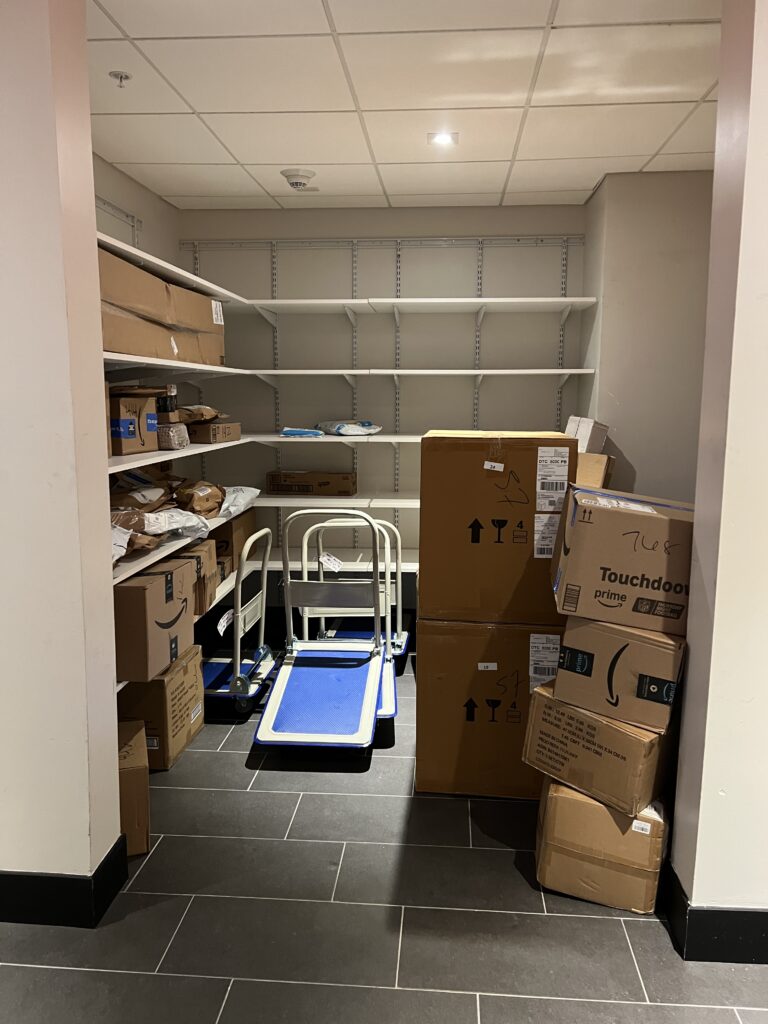
Next, establish a dedicated overflow staging area to relieve pressure on your main room. This could be a storage room or an empty room that can be locked with a key. It needs to be a secure temporary overflow space that addresses current package storage limitations. Begin with the largest items first to maximize the number of tracked packages in the package room. Clearly label and organize this area and keep access restricted to staff-assisted pickup to maintain control and prevent further disorganization. These types of temporary package room solutions buy critical time.
Pause Non-Essential Intake
Finally, reduce incoming volume to stabilize delivery flow. Coordinate with delivery drivers and carriers to adjust delivery windows or temporarily consolidate drop-offs. If need be, create a secure staging area that couriers can deliver packages to, and staff can deliver into the package room at a more convenient time. Even shifting volume away from peak hours can ease a package intake bottleneck and restore manageability during high-pressure periods. With 44% of Americans having reported being a victim of package theft, and apartment dwellers hit the hardest, it’s imperative to ensure that any overflow or staging area is secure.
This Week: Reduce Dwell Time
Once immediate overflow is under control, the next priority is to reduce package room clutter by shortening how long items sit on shelves. Most package room capacity issues are driven by resident pickup delays, not just delivery volume. By tightening processes and improving visibility through package tracking and system portal management, properties can move packages through the system faster and prevent buildups.
These package room management tips focus on behavior, communication, and consistency, the three levers that can significantly reduce congestion within a single week.
Implement a Holding Policy
A clear package holding policy is one of the most effective ways to control package dwell time. Set a defined pickup window—typically five business days—and communicate it across multiple touchpoints, including email, lobby signage, and lease agreements. Consistent enforcement is key to maintaining apartment package management organization and ensuring residents understand expectations.
Automate Reminders
Timely resident notifications are critical to reduce package dwell time. Send daily reminders for packages sitting 48+ hours and escalate to direct outreach at four days. Even without full automation, manual reminders can significantly improve pickup rates and keep inventory moving. Systems like the Smart Package Room solution for multifamily properties include a back-end portal that management and staff can access to determine which packages are stale.
These mailroom automation tips are a critical short-term solution, considering the average household receives 167 packages per year.
Identify Repeat Offenders
Finally, track resident behavior patterns to identify units with consistently slow package pickup. Focused, proactive outreach to these residents can quickly reduce recurring delays and prevent chronic overflow issues. If the resident has a mobility issue due to injury or old age, offer to have staff help with bringing their packages to their apartment.
Though not a long-term solution, this short term fix will be appreciated by residents.
This Month: Capacity Improvements
After stabilizing daily operations and reducing dwell time, the next step is addressing the root cause of recurring congestion: package room capacity issues. For any high-volume apartment package room, incremental upgrades can significantly improve throughput without requiring a full redesign.
These package room overflow solutions focus on expanding usable storage capacity, improving layout efficiency, and introducing systems that scale with delivery demand.
Maximize Vertical Space
One of the fastest ways to increase package storage capacity is by rethinking your package room layout for apartments. Installing vertical shelving up to ceiling height can effectively double storage without expanding the horizontal footprint. Pair this with a rolling ladder to maintain safe and efficient access to upper levels, especially in high-density environments.
Separate Oversized Items
Large deliveries quickly consume valuable shelf space. Creating a dedicated oversized package staging area—typically floor-based—keeps standard shelving clear and organized. This simple separation improves accessibility and supports ongoing package overflow prevention by ensuring small parcels aren’t displaced by bulkier items.

Evaluate High-Tech Package Room Solutions
Finally, consider implementing a package room management system or automated package room solution like the Smart Package Room system to streamline operations. A modern package tracking system for apartments reduces search time, while self-service package pickup minimizes staff involvement. Just as importantly, these systems provide data insights that help properties plan for future demand and avoid repeat overflow scenarios.
Preventing Future Overflow
The most effective way to prevent package room overflow is to treat capacity as an ongoing operational metric rather than a one-time setup decision.
Start by tracking daily deliveries so you can identify clear package volume trends and understand when demand consistently spikes. This data makes delivery surge planning far more accurate, allowing staff to pre-position temporary shelving or designate overflow zones before peak seasons arrive. A strong overflow planning strategy should also include a quarterly review of your package holding policy to ensure it still aligns with resident behavior and current volume levels.
When trends show sustained growth, property teams can justify budget increases and implement long-term package room overflow solutions such as additional shelving, layout adjustments, or expanded secure storage areas.
Below are some of the most common questions property managers ask when trying to fix an overrun package room.
Frequently Asked Questions About Overrun Package Rooms
- How do you fix a package room overflow?
The fastest way to fix a package room overflow is to focus on speed and organization first, then capacity second. Start by clearing oversized packages from standard shelving, creating a clearly labeled overflow zone, and tightening your holding policy so older deliveries are picked up faster. These types of quick fixes for package room overflow immediately create usable space while you evaluate longer-term solutions, such as shelving expansion or digital tracking.
- What causes a package room to overflow?
Most overflows happen because of package room capacity issues combined with inconsistent delivery patterns. A typical property may operate comfortably most of the year, then struggle during a major delivery surge such as the holiday season, move-in periods, or promotional sales events. When package volume increases but storage capacity and pickup speed stay the same, overflow becomes unavoidable.
- What is the fastest way to reduce package room clutter?
The quickest way to reduce package room clutter is to shorten how long packages stay in the room. Focus on reducing package dwell time by sending reminder notifications, adjusting pickup policies, and separating oversized items from standard packages. When residents pick up deliveries sooner, shelf and floor space naturally free up without requiring a full redesign of the room.
- How do apartment buildings handle too many packages?
Most properties dealing with apartment package room overflow use a combination of operational changes and technology. This typically includes better shelving layouts, clearer labeling, and a package room management system that tracks deliveries, automates resident notifications, and improves visibility for staff. Together, these steps reduce lost time, speed up pickup, and make long-term package volume easier to manage.
Fix an Overrun Package Room for Good: A Long-Term Strategy that Works
If your team is trying to fix an overrun package room quickly while also planning for long-term capacity, the right combination of short-term fixes and scalable solutions makes the difference. Today’s actions should focus on quick triage, this week should focus on ways to reduce package dwell time, and this month should prioritize smarter storage and layout changes that help improve resident pickup. These short-term adjustments create breathing room while you plan a more sustainable, long-term package management strategy. The reality is that overflow is solvable when you combine operational discipline with the right technology.
If you’re ready to move beyond temporary fixes, contact the Smart Package Room team today to implement scalable package room overflow solutions that eliminate recurring overflow and support long-term growth.