


It’s the last Saturday in August and 18 new residents are moving into your community at the same time. Every one of them spent the past two weeks clicking “Add to Cart” on furniture, kitchen supplies, lamps, and bedding, with delivery scheduled to arrive by Tuesday. Your daily package volume has tripled overnight, and your package room is already at 60 percent capacity. Managing move-in day logistics for 200+ unit buildings is one of the most underestimated, yet predictable, operational challenges in multifamily.
With a projected 30.5 billion parcels expected to ship in 2030, the ongoing impact of move-in day package volume increases will continue to be a pain point for multifamily properties.
This article gives you an operations-grade playbook for the move-in challenge. You’ll find a pre-move checklist, courier coordination tactics, common mistakes to avoid, and a breakdown of how technology can be leveraged to carry the load. The Smart Package Room system, a Multifamily Package Delivery Solution built around open-shelving package placement and computer vision tracking, is designed to accommodate these surges without adding headcount. You’ll also find guidance on communicating the resident package pickup process to new arrivals before the chaos begins.
Why Move-In Days Surge Your Package Volume
Managing move-in day logistics for 200+ unit buildings starts with understanding why the spike in package volume is so severe. The package-related challenges of move-in week aren’t gradual. Packages don’t trickle in. They arrive in a concentrated burst that hits your package room the same way peak shopping season does. For many multifamily properties, it’s no different from the package chaos produced by Cyber Monday shopping.
The Volume Math Behind Move-In Week Madness
The baseline numbers alone tell the story. According to a survey of more than 2,000 community managers across 29 multifamily firms in 44 states, cited in Multi-Housing News, the average apartment community receives roughly 150 packages per week. During peak periods, that figure climbs to approximately 270 packages per week, an 81% increase driven entirely by concentrated purchase behavior.
Move-in package surges follow the same concentration dynamics as discount-driven holiday shopping surges. New residents spend weeks before their move date clicking “Add to Cart” on furniture, kitchenware, bedding, and home essentials, all scheduled to arrive within the first 72 hours of occupancy. At a building with 18 simultaneous move-ins, that results in a mountain of packages that land all at once, stacking on top of your existing baseline. It also pushes your daily delivery volume well above normal levels for the duration of the move-in window.
Furniture and Forwarding Orders Add to the Surge
Additionally, oversized deliveries concentrate in the first 72 hours after residents move in. Most package rooms aren’t prepared for the physical volume of 18 residents’ sectional sofas, mattresses, and workout equipment arriving on the same afternoon. These items won’t fit on standard shelves, and if you don’t have a designated oversized zone, they will block foot traffic and create a liability.
Residents also continue receiving packages addressed to their previous home. Forwarded mail and standing subscription orders from old addresses keep arriving for weeks, adding a low but persistent flow of additional package volume. Your package room should have buffer capacity for all of it throughout the busy summer move-in season.
Five Operational Moves to Make 14 Days Before Move-In
The best time to solve the package surge problem is before it starts. According to the National Apartment Association, concentrated move-in windows create package floods across all multifamily property types, and the purchase behavior driving them has only intensified. Back-to-college spending has climbed roughly 40% since 2019 per the National Retail Federation, and conventional multifamily communities face the same concentration dynamics whenever high resident turnover compresses move-ins into a narrow window. That’s why it’s so important to develop a proactive approach.
Each of the following steps takes an hour or less to execute, and each one removes a predictable failure point from your move-in week.
1. Pre-Stage Overflow Capacity in a Storage Room or Secured Lobby Corner
Your standard package room capacity was designed for normal operations, not for a surge that can double or triple daily volume in 48 hours. 14 days out, identify a secondary staging area for overflow packages. It could be an unused storage room, a secure section of the lobby, or a corner of the leasing office. Set it up with temporary shelving or rolling carts.
Label the overflow zone clearly and assign a staff member to monitor it. Establish a rotation policy so packages move from overflow to the main room as space opens. This will prevent the primary room from hitting 100 percent capacity.
Communicate the overflow policy to your entire team before move-in day so all staff members know the process.
2. Confirm Courier Delivery Windows and Consolidate Where Possible
Reach out to your FedEx, UPS, USPS, and Amazon route managers at least 14 days before your move-in window opens. Request morning-only delivery windows during the surge period. This is preferable because a team of staff members can be assigned to support couriers for quicker package delivery into the room. Once the packages are delivered, automatic notifications and direct outreach will nudge residents to pick up their packages, and free up the room.
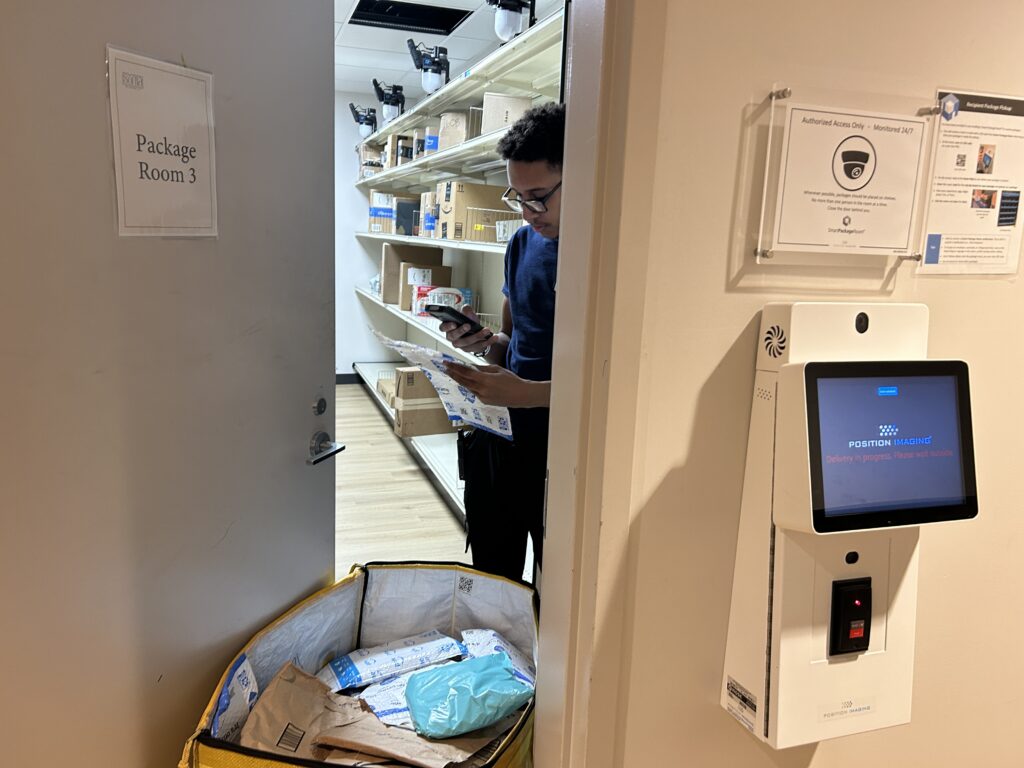
For properties using the Smart Package Room system, ensure that all couriers have their current Courier Card or PIN. Assign a staff member to be available to support couriers at all times. Have them enter the room with couriers and provide a brief reminder of how the MobileKiosk™ handheld works for package delivery. Post delivery instructions at the room’s entrance to reinforce how to deliver packages into the room.
3. Pre-Register New Residents in the Package Management System Before They Move In
Don’t wait for move-in day to create resident profiles in your package management system. The Smart Package Room system integrates seamlessly with leading property management systems, such as Yardi, Entrata, and RealPage. Access your incoming resident list two weeks out to ensure the resident data is fully synchronized for a smooth transition.
This step will all but eliminate the most common move-in day complaint: “I didn’t know my package arrived.” Because the Smart Package Room system sends automatic delivery notifications to residents, the front desk will be removed entirely from the equation. This sets the right expectations from day one. It also reduces the resident package pickup process to a self-service transaction, which is exactly what your staff needs with so much else to handle during the busy move-in period.
4. Communicate the Package Pickup Process and Delivery Address Standards in Welcome Packets
Your move-in welcome packet is the first operational document a new resident reads. Use it to drive awareness for how to use the Smart Package Room system.
Include a one-page overview of the package pickup process, covering the following:
- How to receive notifications – No sign up or app download
- How to access the package room – Scan the QR code notification at the package room kiosk
- How to ensure you’re notified of a package – Have packages shipped to the same name, address, and apartment number that is on your resident contract
The address format piece matters more than most residents and property managers realize. Residents who enter their name or apartment number incorrectly when placing online orders create misrouted deliveries that generate manual work for your team. Reinforce that they should provide the exact format, including building name, unit number, and suite or apartment designation. Post the same information in your resident portal and send it as a welcome text on move-in day as a redundant reminder.
5. Schedule Extra Staff Coverage for 72 Hours After Move-In
The surge doesn’t end on move-in day. Package volume stays elevated for three to five days as orders placed in the weeks leading up to the move continue arriving. Schedule supplemental staff coverage for the full 72-hour window after your first move-in date.
Be specific with your team about what those staff hours are for. Assign one person to support arriving couriers with package delivery into the room, and one to assist new residents with package pickup. Build a check-in rotation so the package room gets walked and tidied up every two hours. Predictable coverage prevents small pileups from turning into resident complaints.
How to Coordinate with Couriers During Move-In Surges
Courier coordination is a differentiator that all multifamily operators should prioritize. It’s one of the highest-leverage moves that operators can make to assist managing multifamily package surge planning. Most courier companies want to deliver efficiently, so give them the information they need to do it.
Reach Out Early and Set Explicit Expectations
Contact your FedEx, UPS, USPS, and Amazon route managers at least two weeks before your move-in window. Introduce yourself as the property contact and explain that you’re expecting a significant volume surge during the move-in period. As shared above, ask for morning-only delivery windows. Most route managers can accommodate this request for a short period with enough notice.
Provide couriers with a one-page delivery instruction sheet that includes the preferred drop-off entrance, their access codes required for building and package room entry, and the name of the staff contact for the move-in period. Include the sheet in your outreach packet and ask the route manager to pass it to the couriers on the route. Post a laminated version at your building’s delivery entrance for couriers who arrive without prior briefing. Consider printing out extras to be handed out at the front desk when necessary.
Use Signage and the MobileKiosk to Manage Real-Time Flow
Even with advance coordination, couriers and staff are likely to encounter package confusion during a high-volume surge. Clear, posted signage at every delivery entrance reduces mis-deliveries and package loss before they happen. Signs should direct couriers to the package room, indicate where oversized items go, and display the name and number of the on-duty staff contact.
Ensure all staff are fully trained on the MobileKiosk handheld system. Have them support couriers during the busiest delivery waves. Staff can scan packages while the courier places them on the standard shelves or in the proper zones. Then switch, so both parties gain valuable experience using the MobileKiosk.
Avoiding Common Move-In Day Package Mistakes
Even experienced operations teams make predictable errors during move-in surges. Knowing where these failure points appear gives you the chance to head them off before they negatively affect the resident experience.
- Letting the package room hit 100 percent capacity before move-in begins. If your room is already at capacity when the first wave of deliveries arrives, you have nowhere to put the surge volume. Set up the overflow area before the window opens, not during it.
- Failing to confirm new resident data is synched in your PMS. New residents who can’t access the package room on day one will call the front desk, every time. Ensure that your PMS has synched with the Smart Package Room system so that resident notifications will go out.
- Relying on manual logging during a volume spike. Manual delivery systems fold under the weight of move-in volume. Staff fall behind, packages get placed without being logged, and the audit trail breaks. Computer vision tracking via the Amoeba Module eliminates this failure point by logging packages automatically as they are placed on standard shelving.
- Skipping a dedicated oversized zone. Oversized deliveries that have nowhere to go end up in the corridor, in the lobby, or sitting outside of the package room door. These outcomes all create a safety issue and a liability risk. Designate the zone before move-in day.
- Forgetting about forwarded mail from previous addresses. Packages addressed to a resident’s old apartment or previous city will keep arriving for weeks. Build that additional volume into your capacity estimates. Also, ensure these parcels are all properly delivered into the Smart Package Room system.
How Technology Shrinks Move-In Day Chaos
Managing apartment move-in operations becomes significantly more achievable when your package management system carries the operational load. The Smart Package Room system is built to handle this kind of temporary surge.
Computer Vision Technology and Automatic Notifications Eliminate Manual Bottlenecks
The Amoeba Module uses computer vision technology to log the location of every standard package that is placed on the system’s shelves. No manual searching is required. During a move-in surge, when couriers and staff are processing deliveries faster than a front desk associate can keep up, the Smart Package Room system maintains a complete, time-stamped record of every package in the room without adding to your team’s workload.
The moment a package is logged, the resident associated with that unit receives an automatic notification via text or email, including a timestamp and a photo of their package. They won’t need to call the front desk. They won’t need to check in with leasing. The notification is sent automatically, and the resident will know exactly when their delivery arrived, and where they can pick it up.
24/7 Self-Service Pickup and Full Audit Trails Protect Your Team
New residents moving in on a Saturday don’t keep business hours. They want to pick up their packages at midnight after a long move day, and the Smart Package Room system lets them do exactly that. The access-controlled package room is available 24/7, and laser, light, and audio prompts guide residents directly to their package within seconds. The front desk need not be involved.
If a resident claims that a package never arrived, a digital chain of custody turns that conversation into a five-second resolution. The system provides a complete audit trail of every package from delivery into the room to resident pickup, including who logged it, when it arrived, and when it left the room. Presence sensors monitor the movement of people and packages in the room 24/7, adding a layer of security during the high-traffic move-in period when there’s a greater risk of unauthorized access.
Frequently Asked Questions About Managing Move-In Day Package Delivery Expectations
1. How Do You Handle Managing Move-In Day Logistics for 200+ Unit Buildings Without Burning Out Staff?
Managing large property move-in coordination without staff burnout comes down to three layers: pre-staging overflow capacity before the surge hits, coordinating with couriers two weeks in advance to request morning-only delivery windows, and deploying self-service pickup technology that removes your front desk from the package pickup equation entirely. When residents can pick up their packages at any hour without staff assistance, your team focuses on leasing, maintenance, and the vital resident experience work that drives retention.
2. How Many Extra Packages Should You Expect on Move-In Day?
More than you’re planning for. The average apartment community receives around 150 packages per week under normal conditions, however move-in periods mirror the same concentration dynamics as peak shopping season, when that figure climbs by 81% according to Multi-Housing News and the NMHC-Kingsley renter preferences survey. New residents front-load furniture, supplies, and bulky decor in the first 72 hours of occupancy, which means the surge lands all at once rather than spreading across the week.
3. Should You Stagger Move-In Dates to Reduce Package Volume?
Where your leasing calendar allows flexibility, staggering move-in dates across two or three weekends is an extremely effective way to reduce package surge volume. Spreading 50 move-ins over three weekends cuts the daily volume spike for that entire period. When staggering isn’t possible because of lease-end clustering or market demand, shift your focus to how to best scale package delivery capacity: pre-staged overflow zones, courier coordination, and self-service pickup technology that handles volume without adding staff hours.
4. How Do You Coordinate with Couriers During Move-In Surges in Large Buildings?
Managing move-in day logistics for 200+ unit buildings requires proactive courier outreach. Contact FedEx, UPS, USPS, and Amazon route managers at least 14 days before your move-in window. Request morning-only delivery windows, provide updated access codes for the Smart Package Room system, and share a one-page delivery instruction sheet with drop-off routing. Post clear signage at the building entrance for couriers who arrive without prior briefing.
5. What Is the Best Way to Communicate the Package Pickup Process to New Residents?
Include a one-page package pickup overview in your move-in welcome packet. This should cover how residents receive notifications, how to access the package room, and the exact delivery address format for their unit. Send a text reminder on move-in day with the same information. For residents unfamiliar with the system, consider planning a brief kiosk walkthrough to familiarize them with the system. A resident who understands the pickup process from day one generates fewer front-desk calls and complaints throughout their tenancy.
6. How Do You Handle Furniture and Oversized Deliveries During Move-In?
Managing move-in day logistics for 200+ unit buildings means planning for an influx of oversized deliveries. Designate a dedicated oversized staging zone outside the main package room before move-in day begins. This zone should handle sectional sofas, mattresses, appliances, and any parcel that’s too large to fit on standard shelving. Couriers and staff should be briefed on the zone location so oversized items never block the package room entrance or the building corridor.
7. What Technology Helps with Move-In Day Package Management?
The Smart Package Room system is a high-tech package delivery platform designed to address the additional package volume generated during move-in. The system’s Amoeba Module uses computer vision tracking technology to log every standard package automatically, with no manual searching required. Automatic notifications in the form of text or emails are sent to residents the moment a package is logged into the system. The MobileKiosk supports quick delivery for high-volume delivery periods. Presence sensors monitor the movement of people and packages in the room 24/7 so security stays consistent even when foot traffic spikes. The result is a system where couriers deliver packages quickly, and residents pick them up without friction and on their own schedule. This allows staff to manage the surge from the front desk rather than from inside the package room.
8. How Do You Prevent Package Theft During High-Traffic Move-In Periods?
Managing move-in day logistics for 200+ unit buildings includes protecting the chain of custody for all residents’ packages during a period when more unfamiliar faces are in the building than at any other time of year. The Smart Package Room system restricts room access to verified couriers, residents, and property staff only. Presence sensors monitor the movement of people and packages in the room continuously, and the system logs every entry and exit with a time stamp. Similarly, the Amoeba Module maintains a time-stamped audit trail for every standard package from arrival to pick up. When a package theft claim arises, the audit log turns the investigation from a multi-day process into a short system review.
9. Can You Increase Package Room Capacity Temporarily for Move-In?
Yes, and you should plan for it before the surge hits rather than during it. Pre-stage a secondary overflow zone in a storage room or a secure lobby area. Establish a daily rotation policy: packages that have been in overflow for more than 24 hours move to the primary room as space opens up. Post clear signage directing couriers to use overflow when the main room is full. A consistent rotation policy move packages into residents’ hands quicker and prevents overflow from becoming a permanent second room.
10. How Do You Measure Whether Your Move-In Surge Management Strategy is Working?
Managing move-in day logistics for 200+ unit buildings means setting clear metrics before the window opens. Track resident complaints in the form of package-related inquiries for the first 72 hours after move-in. Monitor staff overtime hours during the surge period compared to a normal week. Review package dwell time in the room. Packages sitting longer than 48 hours after notification indicate a breakdown in the resident pickup process. Track any lost package claims as a direct quality signal. If all four metrics stay within normal range during your move-in surge, your system is working. If any of them spike, request a consultation with the Smart Package Room team to learn how a tech-enabled system can help you manage the move-in package chaos.
The Bottom Line on Move-In Day
Move-in week chaos is predictable. The impending package volume spike is predictable. The failure points, too, are also predictable. Managing move-in day logistics is possible when you’ve invested in a system that can handle the package surge without increasing staff labor hours. Here’s what you should keep in mind:
- Pre-stage overflow, your regular capacity won’t survive 18 simultaneous move-ins without a secondary zone to handle overflow.
- Couriers want clarity, two weeks of proactive coordination cuts down move-in day chaos and keeps couriers and staff working from the same playbook.
- Self-service ends front-desk overflow, residents pick up at midnight after a long move-in day without ever calling the leasing office.
- Audit trails save liability, computer vision tracking via the Amoeba Module turns “where is my package” into a five-second answer backed by a time-stamped log.
If you’re managing move-in day logistics for 200+ unit buildings and your current package room can’t absorb 50 extra deliveries on a Saturday, you’ve got some work to do. Request a consultation with our team of package management experts today. Move-in surges expose weaknesses that remain hidden during normal operations. The communities that manage them successfully are the ones that prepare their package infrastructure before the volume spike arrives.