
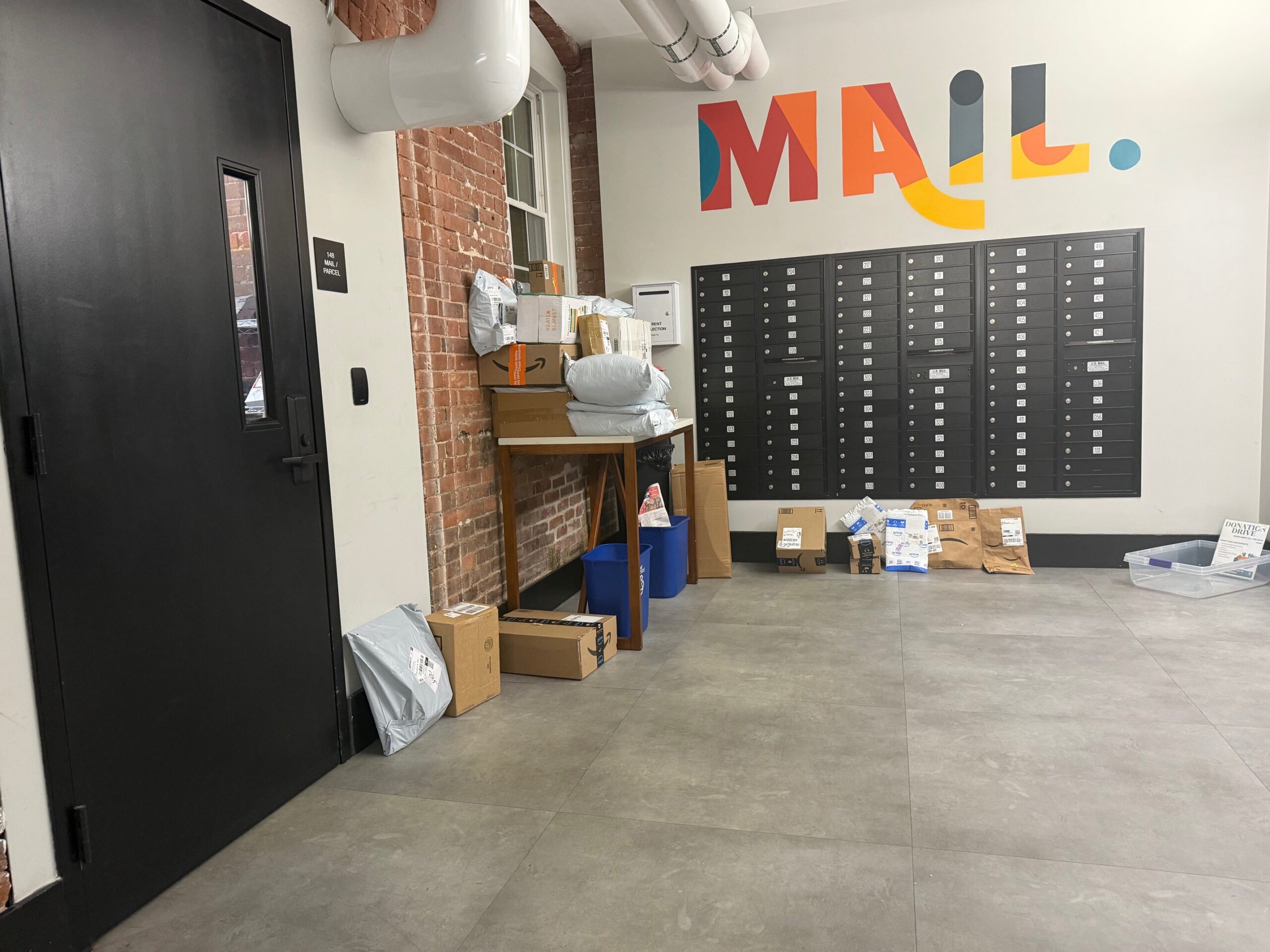

At smaller apartment communities, organizing deliveries may be as simple as adding a few shelves and labels. But when a multifamily property receives up to 5,000+ packages per month, those solutions become stressed and fall apart. If the system isn’t designed for scale, this can cause overflowing shelves, messy lobbies, lost packages, and frustrated residents. That’s why effective package room organization tips for high-volume apartment buildings must go far beyond simple storage solutions.
Across the U.S., package deliveries to multifamily communities continue to rise as e-commerce grows and residents expect fast, convenient shipping. In 2025 alone, 23.4 billion packages were shipped across all major couriers. For property teams managing a busy mailroom, the challenge isn’t just storing packages, it’s creating a workflow that keeps deliveries organized, searchable, and accessible throughout the day. Modern solutions such as a Multifamily Package Delivery Solution help streamline this process, but operational organization still plays a critical role.
In this guide, we’ll break down proven package room organization systems designed specifically for high-volume apartment buildings, including zone-based layouts, vertical shelving strategies, and surge-season overflow planning.
Here’s a preview of the key points that will be discussed in this article.
5 Package Room Organization Systems for High-Volume Buildings:
- Zone-based package organization
- Vertical shelving maximization
- Oversized package staging zones
- Daily rotation to reduce package dwell time
- Peak-season overflow planning
Why High-Volume Properties Need Different Organization
Package delivery has become a defining operational challenge for large apartment communities. Meeting that expectation requires more storage, and a futureproof package room organization system built to handle sustained delivery volume. Amazon alone shipped 6.3 billion delivery orders in 2024, an astonishing increase from 2018, when they only shipped 0.8 billion packages.
In smaller properties, basic shelving and a hand labeling system may be enough to keep packages organized. But at high-volume buildings receiving 300 or more deliveries per day, those basic setups quickly break down. Shelves fill up by noon, after the first major courier delivery. Stacks of packages flow onto the floor, the lobby and temporary holding areas. This causes properties to look cluttered and leaves these unsecured packages exposed to theft.
It also results in slower pickup times and rising frustrations for residents waiting to retrieve their items. As delivery volume increases, even minor inefficiencies multiply quickly. Residents, many of whom receive multiple packages in a day, are forced to search through dozens of packages spread across the room to find theirs. Without a structured package room organization system designed for scale, high-volume mailrooms can become chaotic, resulting in misplaced deliveries, longer search times, lost packages, and a growing number of resident complaints.
5 Organization Systems That Handle Volume
1. Zone-Based Organization
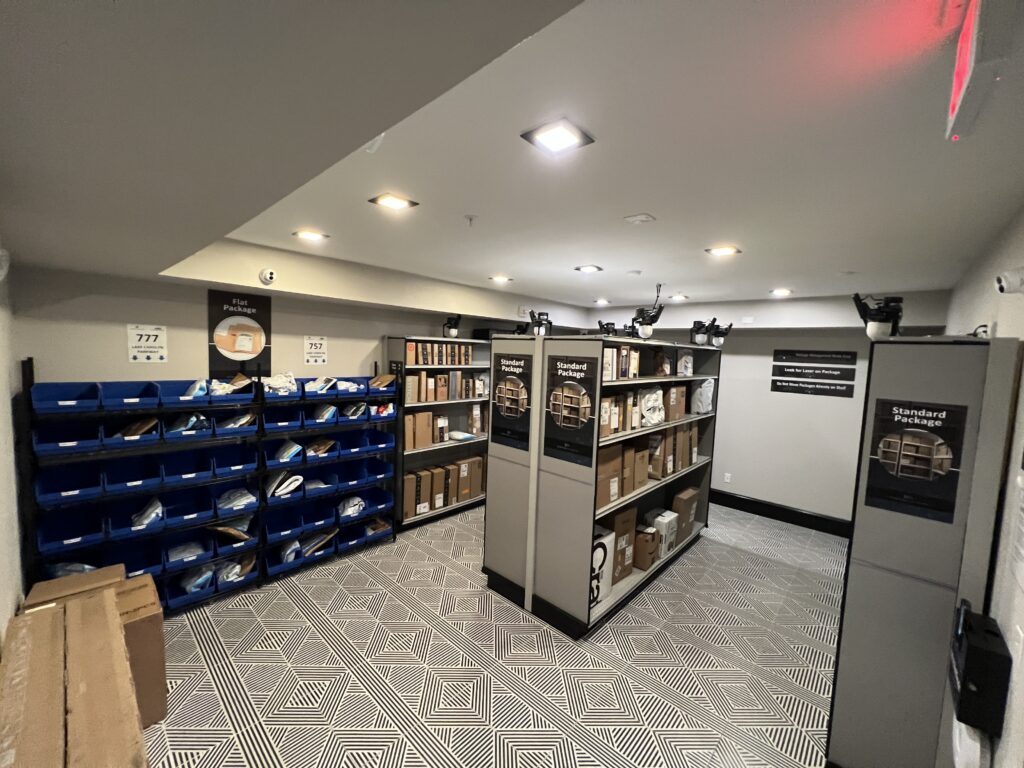
The Smart Package Room system features zones for various kinds of deliveries, allowing for a faster package pickup. Standard packages are placed on shelves and tracked with AI-powered computer vision technology for faster resident pickup. Oversized packages are placed in a specific zone, allowing for packages of all types and sizes, such as furniture, workout equipment, and bedding. Flat packages—think Amazon envelopes—are placed in bins that are labeled by unit number, floor or resident last name. The Smart Package Room system’s offering for high-volume buildings also includes specific zones for dry cleaning and refrigerated items, such as meal kit plans and medicine.
2. Vertical Shelving Maximization
When organizing an apartment mailroom for a multifamily property with 300+ units, shelving proves crucial to maximizing package capacity. With shelving, packages can be stacked side by side, efficiently, along the length of the shelf. Most shelving systems feature three or four rows, allowing for 2-3x the amount of package storage in the same footprint over locker systems, which rely on space-constricted compartments.
When packages are monitored by precision tracking technology and placed on open shelving, deliveries take less time, the storage density of a package room is increased, and resident pickup time is reduced. This is another example of how efficient package room organization reduces resident package retrieval time, especially during evening pickup surges.
3. Oversized Package Staging Area
Access-controlled package rooms like the Smart Package Room system carve out dedicated floor space for larger items. This is important because packages arriving at apartments are increasing in size, with residents frequently receiving larger shipments such as furniture, appliances and oversized goods.
When planning your apartment package room setup, designate clearly labeled oversized zones so standard shelves stay clear. This results in a faster resident pickup experience.
4. Daily Rotation System
One of the most crucial mailroom automation tips for high-volume apartments is to have a process for avoiding package dwell time. Check package logs to identify packages that are considered stale. This varies by property but generally means packages that have been sitting in the package room for three or more days. Once identified, set up a communication process to give residents a friendly nudge to retrieve them. Across hundreds of Smart Package Room sites, we’ve seen that mentioning this to residents when they enter the building or sending them a text can help with package room management.
5. Peak Season Overflow Protocol
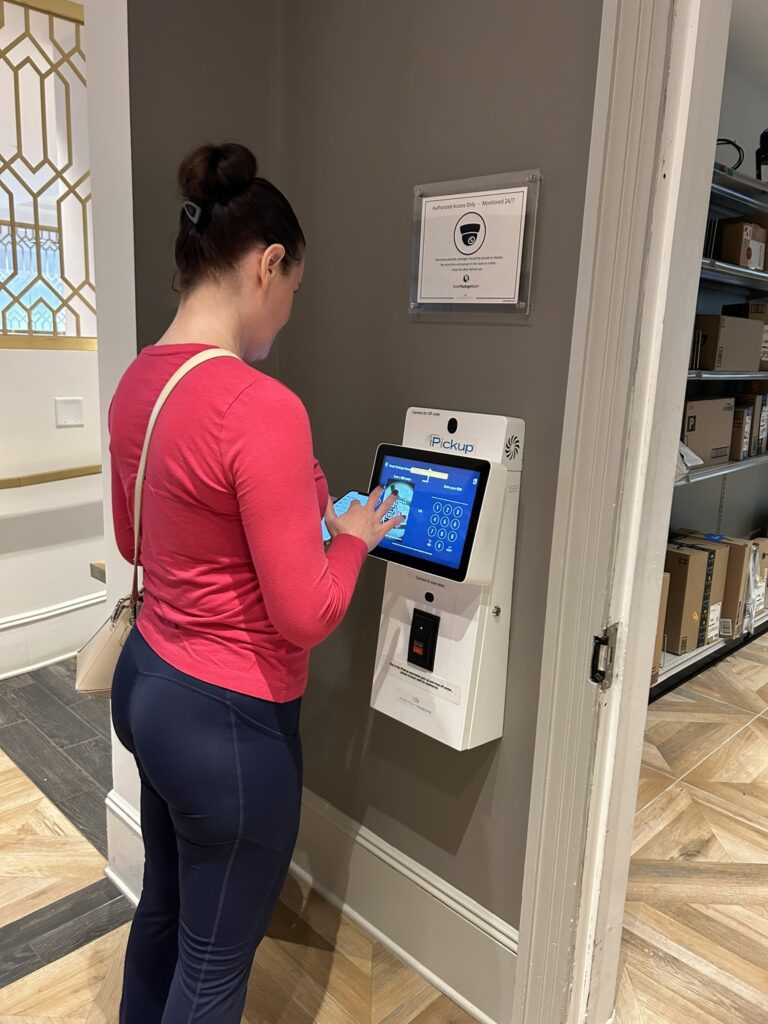
Package room organization for apartments with hundreds of units is the most stressed during the heavy shipping periods from November through January. Combat the delivery surge by establishing an overflow plan. With the Smart Package Room system, this can be accomplished by designating an overflow room for oversized packages, which are most likely to clog up the package room. Once the overflow room is set up, resident notifications and the system’s interface will guide them to their package.
Read how the Smart Package Room system brought calm to the package chaos at Stuytown, NYC, America’s largest apartment community when it needed it most.
The Labeling System That Actually Works
One of the proven apartment package room organization ideas for larger properties is to establish a package labeling system for residents to quickly locate their packages. For some systems, manual labeling works best. For others, digital package tracking proves effective. In certain cases, properties implement a hybrid solution. What works best for high-volume buildings?
Using a marker to label all packages by unit number is effective when package volume is manageable. This task tends to fall on staff, so larger properties with a higher package intake struggle to allocate the time required to manually label every package.
This is where precision tracking technology comes in. For standard packages, the Smart Package Room system uses digital tracking to log the time and location of packages on the shelf. QR code notifications give residents access into the room, then laser, light and audio cues guide them to their package.
When clear labeling is used with a tech-forward package management solution, resident satisfaction improves and package disorder subsides. Writing large, visible unit numbers on all oversized packages helps residents quickly retrieve packages from the oversized zone.
The Ideal High-Volume Package Room Workflow
At high-volume apartment communities, organizing packages isn’t just about shelving, it’s about creating a consistent workflow from delivery to resident pickup. Most efficient properties using the Smart Package Room system follow a structured process that begins with a package intake station where couriers place deliveries before logging them in. From there, couriers or staff enter the secured package room and handle the package intake, logging each delivery into the property’s package management system.
Packages are organized by zone, with standard packages placed on shelves, oversized and flat packages placed into specific areas, cold-storage items into refrigerators, and dry cleaning hung on specified racks. After placement, residents receive automatic notifications alerting them that their delivery is ready.
Finally, the system records each resident pickup, helping property teams monitor package dwell time, identify bottlenecks, and maintain smooth operations during high-volume delivery periods.
Staff Workflow for High-Volume Days
Like clockwork, when Cyber Monday, Amazon Prime Days, and other eComm shopping holidays arrive, mountains of packages follow. For high-volume apartment complexes, it’s more like mountain ranges. In January, properties should mark their calendar for the time periods when they will need additional support to manage package volume.
When planning how to organize an apartment package room for peak shipping periods, it’s important to assess staff availability. Overlap coverage schedules by an hour or two at the beginning and end of each shift to free up associates to manage packages. Allocate a supplemental budget to bring on third party support. Most important, train staff on how to use the package management system and how to support couriers on-site.
Also, create a dedicated package intake station separate from the package room. This will prevent clutter in lobbies and resident gathering areas, and facilitate faster, more organized package delivery into the room.
Measuring Organization Effectiveness
Data plays an important role in evaluating the effectiveness of high-volume apartment package room organization systems. By tracking how residents interact with the package room, property teams can identify operational bottlenecks and opportunities to improve efficiency.
Systems like the Smart Package Room multifamily solution include a management portal that helps staff understand how their package room operates. Property teams can monitor residents’ average package search time throughout the year, revealing periods when packages are harder to locate or shelves become crowded.
Usage analytics can also show daily pickup patterns. At many properties, the busiest period occurs in the early evening—typically between 5:00 and 7:00 p.m.—when residents return home from work and retrieve deliveries.
Tracking misplaced package incidents helps uncover recurring issues with labeling, shelving, or delivery sorting. When property teams consistently measure these metrics, they can refine their organization systems and maintain smoother package retrieval even during high-volume periods.
Finally, every package interaction within the Smart Package Room system is recorded through a digital breadcrumb trail, ensuring complete visibility into each step of its movement. This results in fewer lost packages and a better resident experience.
Frequently Asked Questions
- What are the best package room organization tips for high-volume apartment buildings?
The best package room organization tips for high-volume apartment buildings focus on systems that scale with delivery volume. Properties receiving hundreds of packages daily benefit from zone-based layouts, organized shelving to maximize storage capacity, and designated oversized package areas. Clear labeling systems and digital package tracking also help reduce search time and improve the resident pickup experience. When combined with a structured workflow and resident notifications, these strategies create an efficient multifamily package room organization system.
- How do you organize an apartment package room that receives hundreds of deliveries per day?
To organize a high-volume apartment mailroom, property teams should implement apartment package room organization systems designed for scale. Best practices include dividing the room into delivery zones, creating a dedicated package intake station for couriers, and using vertical shelving to increase storage capacity. Establishing clear labeling systems and separating oversized items helps prevent package overflow while ensuring residents can quickly locate their deliveries. Multiple package rooms allow for quick and easy pickup during peak shipping times, and a personalized and fast pickup experience for all residents.
- How can property managers improve apartment package management organization?
Property managers can improve apartment package management organization by combining operational processes with smart technology. Establishing a structured package room organization system, training staff on delivery and pickup workflows, and using digital package scanning and tracking tools helps streamline deliveries. Data analytics can also reveal peak pickup times and high-volume delivery seasons, allowing teams to optimize staffing and improve overall package room management efficiency.
Building a Scalable Package Room Organization System
Managing deliveries at large apartment communities requires more than basic storage solutions. As package volume continues to grow nationwide, effective package room organization tips must focus on systems designed for scale. High-volume properties benefit from structured apartment package room organization strategies such as zone-based layouts, vertical shelving, and clearly defined overflow protocols. These approaches reduce package dwell time, improve resident pickup efficiency, and help staff maintain order during major delivery surges.
Generic setups may work for smaller communities, but they fall short when buildings receive hundreds of packages per day. A purpose-built package room organization system paired with smart technology creates a faster, more reliable experience for residents and property teams alike.If your community is struggling with delivery volume, explore how the Multifamily Package Delivery Solution from Smart Package Room can help streamline package management, improve organization, and future-proof your property for years to come.