


How can multifamily communities keep pace with surging online delivery volume? The answer is investing in the right system, then building staff workflows around it. In 2025, U.S. carriers moved 23.1 billion parcels, up from 22.4 billion in 2024, and apartment communities absorb a disproportionate share of that volume. Strong multifamily package management keeps your front desk, your residents, and your peak seasons from breaking.
This guide compares the options multifamily owners actually evaluate (manual handling, lockers, Smart Package Room systems, and off-site services) and walks through a seven-step rollout. It’s written for developers, owners, operations directors, and property managers who need a system that holds up on Cyber Monday and quietly handles the other 364 days. Automation is what separates the two.
When a community adopts a well-designed system, the package room stays organized, every parcel is easy to find, and residents stay satisfied. Efficient operations reduce manual tasks and build trust by locking down every stage of delivery. You’ll see how to evaluate options against your building, what to expect from each system, and what a frictionless rollout actually looks like.
Why Package Management Solutions Matter in Multifamily Communities
Residents shop online more than ever and expect their deliveries to land safely and on time. Many buildings process hundreds of packages per month, and individual residents routinely receive multiple parcels weekly.
You need a good system so that deliveries stay organized, staff time stays focused on services, and residents get swift, secure pickup every day. Package management is no longer a nice-to-have amenity. Like high-speed internet and building security, it’s core infrastructure now.
Package management matters in multifamily communities for several reasons:
- Resident satisfaction and retention: Modern systems keep deliveries on schedule, safeguard every package, and reduce wait time.
- Staff workload and efficiency: Smart systems free your team to focus on leasing and resident engagement. Without automation, staff can spend hours per week sorting deliveries.
- Security and theft prevention: Porch pirates stole $8.2 billion in packages last year. Secure systems deter thieves and create accountability.
- Scalability for peak seasons: Holiday and delivery surges can double parcel volume, and the right system scales without overwhelming staff or space.
- Community reputation and competitiveness: Renters compare amenities, and communities with proactive package management stand out in a tight leasing market.
Comparing how each system would handle your community’s specific volume, layout, and resident profile is the most important first step. Once you know what you need, you can confidently evaluate the options on the market.
Common Package Management Solutions Compared
Every community has a different layout, budget, and resident profile. Each of the package management options below trades a different mix of cost, capacity, and resident experience.
Manual Package Handling
Before automation, many communities managed packages through manual workflow. Couriers delivered to the leasing office, staff signed for parcels, and residents retrieved items during office hours. The approach required no equipment and offered flexibility at small volumes, but it breaks under today’s demand.
A typical 250-unit apartment community can handle roughly 1,000 packages per month, and that volume creates labor burdens that erode productivity. As deliveries accelerate, manual logging and handoffs strain teams and weaken the resident experience. Overflow storage also creates clutter and safety risks.
Locker-Based Systems
Locker systems were the first wave of automated package management solutions, using built-in compartments to manage and store packages for residents. Couriers or staff place parcels in designated lockers, and residents pick them up at any time, reducing front-desk handoffs.
Many setups include refrigerated modules for perishables and integrate with property management software, creating organized, self-service storage that sends instant alerts.
Lockers trade flexibility for fixed boxes and square footage, so expansions require more hardware. Oversized packages or peak surges still cause overflow that gets left out unsecured or pushed back to staff, especially during holidays.
Smart Package Room Systems
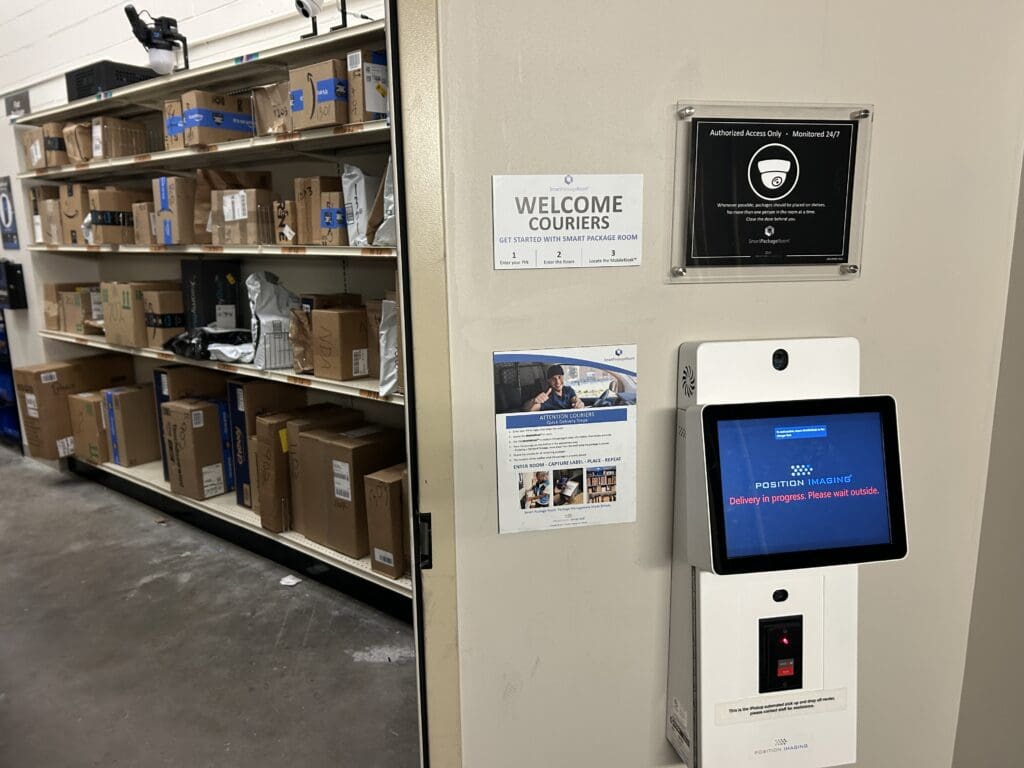
The Smart Package Room system replaces fixed lockers with open shelving, computer-vision modules that monitor the room, and the Amoeba Module, a precision-tracking component that records each parcel’s location and guides residents to it.
- Flexible storage for every parcel type: Open shelving accommodates any size or shape without locker-dimension limits, with dedicated zones for oversized, refrigerated, and specialty items. Envelope bins and overflow areas use visual maps on the kiosk and audio guidance instead of vision tracking. Every package stays behind an access-controlled door.
- Fast, guided pickup: Residents enter with a QR code or PIN and follow light, laser, and audio prompts from the Amoeba Module to the exact shelf. Precision tracking confirms the right parcel and records the event, cutting errors and dropping pickup time to seconds.
- 24/7 access without staff: Residents pick up at any hour, with automatic text or email alerts when packages arrive. In-room guidance replaces the front-desk handoff and frees staff hours for resident services.
- Built-in accountability: Presence sensors monitor the room 24/7 and create visual records of every package event. Digital logs make dispute resolution fast and give every parcel a clear chain of custody.
- Scalable by design: Capacity expands by adding shelves or defining new zones rather than buying additional locker banks. Open layouts absorb seasonal surges and large-item spikes through holiday and promotional peaks without forcing overflow back to staff.
The Smart Package Room system handles more packages per square foot than lockers, often two to three times as many. Now that you know the options, you can apply the factors that actually drive a decision.
Key Factors to Consider When Choosing Package Management Solutions
Property managers must examine the building’s physical layout, resident behavior, and long-term strategy. Picking the right system involves more than choosing the latest gadget; failing to choose a scalable system results in costly upgrades later. Use this framework to evaluate your options.
- Capacity and scalability: Data analytics from existing systems or third-party surveys can reveal daily and seasonal peak package volume trends. Package management solutions should provide secure, organized storage that helps staff handle overflow during peak times.
- Resident convenience: The Smart Package Room system enables residents to pick up packages at any time, eliminating time constraints and reducing wait time. Look for systems that offer mobile notifications, user-friendly interfaces, and accessibility features.
- Operational efficiency: Assess the current allocation of staff time to package-related tasks and consider software integration for streamlined reporting. Automation reduces staff workload by scanning packages and automatically sending resident notifications.
- Security and tracking: Safety is non-negotiable. Systems should deter theft with access control, QR codes, and round-the-clock room monitoring. Digital logs create accountability and help resolve disputes. For a deeper look at protecting deliveries, see how to reduce package theft in apartments.
- Flexibility for all parcel types: People order everything from groceries to furniture. Choose a solution that accommodates oversized items, refrigerated goods, and dry cleaning items in addition to standard packages and envelopes. The Smart Package Room system handles a wide range of packages.
The best systems strike a balance between capacity, convenience, and efficiency, providing a secure and flexible experience. Communities that choose scalable, tech-driven systems avoid future headaches and provide amenities residents appreciate.
Why the Smart Package Room System Stands Out
The Smart Package Room system offers a compelling combination of scalability and technological affordability among the available options. It takes the concept of a traditional package room and adds precision tracking to create a frictionless experience for residents and staff.
Highest Package Capacity per Square Foot
The Smart Package Room system delivers the highest package capacity per square foot by using open shelving instead of fixed locker compartments. Shelves adapt to actual parcel sizes, so every inch of the room earns its keep, from padded envelopes to bulky totes.
During promotions or holidays, you create secure overflow package rooms to absorb surges without pushing parcels back on staff. The result is fewer bottlenecks, faster trips, and smoother daily operations for residents.
The best package management solutions accommodate every parcel type. Flexible storage handles a diverse range of packages and enables immediate retrieval on-site.
Universal Storage Compatibility
Storing and securing every parcel type on-site, without exception, let you accommodate bulky parcels, oddly shaped boxes, and even dry cleaning items. Unlike off-site services that depend on third-party schedules, on-site rooms enable immediate retrieval the moment a carrier delivers. This flexibility reduces delays and keeps hallways clear.
Next, assess how each option handles delivery and retrieval speed. Location-aware guidance routes couriers and staff to the correct drop zone and walks residents to the exact shelf, cutting handling time on both ends.
Computer Vision and Audio Guidance
Systems such as the Position Imaging Smart Package Room system use computer vision technology to track each package and direct residents to the correct item. Computer vision modules monitor standard shelves, while other zones use visual maps and audio guidance for retrieval.
If a resident grabs the wrong package, the system sounds an alarm, prompts them to put it back, and records the event.
This technology also provides real-time notifications, generating a digital trail for property managers. It also makes sure the amenity serves everyone equally, regardless of what they purchase or when deliveries arrive.
The convenience of the Smart Package Room system’s technology works best when it fits the space you have and can scale as your property’s needs evolve.
Space-Efficient and Scalable Storage Options
Instead of building new locker banks, communities can convert an existing package room with shelving and intelligent software. You can implement the system in phases and expand as demand grows. The flexible design fits various floor plans, from small boutique buildings to large portfolios.
The Smart Package Room system delivers the benefits of lockers and off-site solutions while avoiding their drawbacks. Its combination of high capacity, universal compatibility, precision tracking, and flexible design makes it an ideal choice for forward-thinking multifamily communities.
Real-World Results in Multifamily Properties
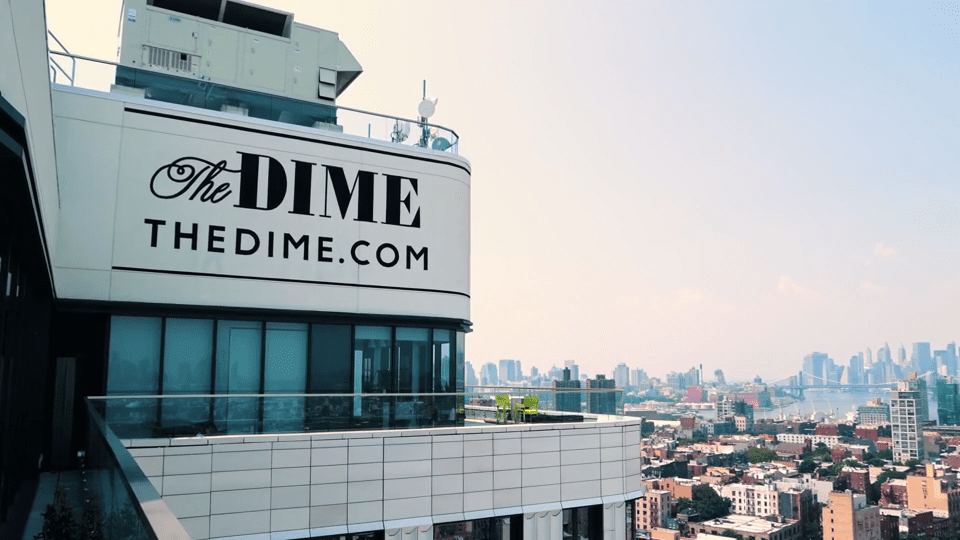
The Dime, a mixed-use development in Brooklyn, implemented the Position Imaging Smart Package Room solution. Residents retrieve packages 24/7 using mobile credentials and computer vision technology.
The system has handled 100% of deliveries, including oversized items and high-value parcels, while reducing staff time and improving resident satisfaction. After installation, staff reclaimed hours previously spent sorting packages, and residents praised the smooth pickup experience. For more details, you can read the case study.
Many multifamily owners now view package amenities as essential to property operations. The multifamily residence at 210-220 East 22nd Street in New York City stated, “With the Smart Package Room, we were able to reduce labor costs, while also allowing the staff more time to do their assigned daily activities.”
These results translate into financial returns. Properties that invest in modern systems often see ROI within months from labor savings, higher efficiency, and stronger resident retention. When residents trust that their deliveries are safe and accessible, they’re more likely to renew their leases and recommend your community to friends, lifting both occupancy and revenue.
Seven Steps in Transitioning to a Smart Package Management Solution
Switching from manual workflows or lockers to smarter package management solutions becomes straightforward when you follow a structured plan.
Step 1: Benchmark Demand and Pain Points
Use your existing delivery data to guide how you size and design the room. Build a baseline you can use to size capacity, estimate savings, and prove ROI later.
- Capture daily averages, peak days, and the percentage of standard, envelope, oversized, refrigerated, and irregular items.
- Time each task from intake to resident pickup so that you can quantify staff minutes and establish an ROI baseline.
- Pull carrier scans and property management reports to validate estimates.
Step 2: Evaluate and Prepare the Space
Select a room that supports clean circulation for couriers and staff and for residents. Confirm power, network, and accessibility so that the environment matches the system’s needs.
- Audit existing package rooms or storage areas for square footage, power outlets, network connectivity, ventilation, and ADA paths.
- Plan clearly labeled zones (standard, envelope, oversized, refrigerated, dry cleaning) as well as safe, uncluttered storage.
Step 3: Design the Layout and Select a Partner
Translate your data into a room plan that handles today’s volume and expands as package counts grow. Choose a provider that can tailor shelving, guidance, and integrations to your operations.
- Customize shelving counts and heights to match your parcel mix, and confirm sightlines for in-room monitoring.
- Integrate access control and notifications so that residents receive automatic text and email alerts with simple credentials for entry.
Step 4: Implement and Integrate
Install hardware and connect software so that the front desk stays uninterrupted. Test every flow end-to-end before you open the room to residents.
- Coordinate and complete installation, typically within one to three days if the room is already built.
- Connect access systems, notifications, and reporting dashboards, then run end-to-end tests with sample deliveries and resident pickups.
Step 5: Provide Training and Onboarding
Equip your team to handle exceptions confidently and use reports effectively. Give residents simple guidance so that their first visit is fast and successful.
- Thorough training is provided to all staff on monitoring, exception handling, and reporting, supported by quick-reference guides, phone follow-ups, and a video portal.
- Provide residents with clear instructions, on-site signage, and concise how-to videos or emails that outline credentials and pickup steps.
Step 6: Launch and Communicate
Announce the go-live widely so that everyone knows what to expect on day one. Reinforce the benefits and the simple steps for accessing and retrieving parcels.
- Announce go-live dates, access instructions, and benefits across email, the resident portal, lobby signage, and move-in packets.
- Stagger courier briefings so that drivers understand drop-off steps before peak times arrive.
Step 7: Monitor, Optimize, and Scale
Use data to keep your package management solutions running smoothly as volumes and parcel types evolve. Expand capacity ahead of surges.
- Track volumes and first-attempt pickup rates, and then adjust shelving or prompts where needed.
- Add shelves or redefine zones ahead of holidays, and refresh staff and resident education on a quarterly basis to keep operations sharp.
Frequently Asked Questions
What Are Package Management Solutions for Apartments?
Package management solutions for apartments are systems that receive, secure, organize, and notify residents about delivered parcels. The four main categories are manual handling, locker-based systems, high-tech package rooms, and off-site delivery services. The right choice depends on your community’s daily and peak package volume, available space, staffing model, and resident expectations. Most multifamily owners weighing options today are moving away from manual workflows and fixed lockers toward open-shelving systems that add capacity by the shelf rather than by the locker bank.
How Do Smart Package Management Solutions Differ from Lockers?
Lockers store packages in fixed, predetermined compartments, which means oversized parcels often overflow back to staff or sit unsecured in the lobby. Smart package room systems use open shelving, computer vision, and access control to track every parcel without locking it into a single-size box. The Smart Package Room system, for example, holds two to three times more packages per linear square foot than traditional lockers, and accepts every parcel type from envelopes to dry cleaning items.
How Much Do Package Management Solutions Cost for a Multifamily Community?
Costs vary by package volume, building size, and the level of automation. Manual workflows cost nothing to set up but burn staff hours that add up quickly. Locker systems carry the highest upfront hardware cost and require service contracts. Smart package rooms typically come in lower than full locker installations because they reuse existing space, scale with shelving rather than additional hardware, and reduce ongoing labor costs. Most properties recoup the package management solutions investment within months from staff time savings and higher renewal rates.
Are High-Tech Package Rooms Secure?
A well-designed package room combines secure access control, presence sensors that monitor personnel in the room 24/7, and the system’s time-stamped delivery logs that establish a verifiable chain of custody by documenting every package’s location from the time it’s delivered into the room. Only couriers, residents, and property staff can enter, and every entry and pickup is recorded. If a resident takes the wrong package, audio prompts ask them to return it and the system records the event for staff review.
How Long Does It Take to Install a Smart Package Room System?
When the room is already built, installation typically takes one to three days. The bigger timing variable is room readiness. If construction, electrical work, or network drops are needed, plan extra lead time for those trades. Most properties also schedule one to two weeks of staff training and resident communication around the launch so that the first delivery week runs smoothly. Acting ahead of Q4 delivery periods is the simplest way to deploy modern package management solutions without a peak-season scramble.
Can Package Management Solutions Handle Oversized and Refrigerated Items?
Better systems handle every parcel type. The Smart Package Room system organizes deliveries into five zones (standard, envelope, oversized, refrigerated, and dry cleaning items) so that couriers and staff drop each parcel into the correct area. The standard zone uses computer vision for precise tracking, and the other zones display location on a kiosk map with audio guidance. This is a meaningful gap for lockers, where oversized or perishable items routinely overflow back to staff.
Do Residents Need an App to Pick up Packages?
Residents pick up packages with a QR code or PIN, depending on what your community prefers. A mobile app is convenient for instant text and email alerts, faster check-in, and a personal delivery history, but it’s not the only access path. Couriers use key cards or PINs to deliver into the room, while QR codes are reserved for residents. This separation keeps access logs clean across package management solutions, and makes it easy for staff to audit who entered the room and when.
What Are the Most Common Pain Points Package Management Solutions Solve?
Three pain points dominate operations conversations: too many packages arriving daily for the available space, the floor turning into a clutter zone during peaks, and lockers not cutting it once parcel sizes diversify. Modern systems solve all three by replacing fixed compartments with flexible shelving, automating notifications so staff stop chasing residents, and creating a digital trail that ends where-is-my-package disputes. The downstream wins are reclaimed staff hours, fewer resident complaints, and lower theft losses.
How Does a Smart Package Room Support Peak Holiday Volume?
Capacity expansion happens through shelving and zone reconfiguration rather than buying new locker banks. You can create temporary overflow zones inside the room ahead of Cyber Monday or other delivery periods, and remove them when volume normalizes. Computer vision and presence sensors keep accountability intact even when daily intake doubles. Properties that plan two to four weeks ahead of peak periods see the smoothest package management solutions launches and avoid the front-desk pileups that drag down resident satisfaction.
What Should Property Managers Look for in Package Management Solutions?
Look for full automation that lets couriers and staff deliver without front-desk help, real-time resident notifications, secure access control tied to your existing building system, chain-of-custody tracking with time-stamped logs, flexible storage that grows with you, a property dashboard with reporting and audit tools, and a provider with a track record in multifamily. The right system feels invisible to residents when everything works and provides a clear paper trail the moment something goes wrong.
Key Takeaways
The right package management solutions turn one of the most chaotic operational moments of the day into a quiet, automatic background process. Where manual workflows and fixed lockers break, high-tech package rooms absorb the surge: oversized parcels, refrigerated drops, and holiday peaks.
- The Smart Package Room system stores two to three times more parcels per square foot than lockers and handles every parcel type.
- Precision tracking, presence sensors, and a verifiable chain of custody protect deliveries and resolve disputes quickly.
- 24/7 access plus automatic text and email alerts free your team from manual handoffs and lift resident satisfaction.
- A seven-step rollout (benchmark, prepare, design, install, train, launch, monitor) keeps the transition predictable and ROI-friendly.
Treat the choice as core infrastructure instead of an amenity, and your operations and your renewals will both thank you.
Make the Smart Choice for Your Community
Eliminate the inefficiencies and risks of unmanaged deliveries. If you’re ready to upgrade your package management solutions, book a demo. A Smart Package Room specialist will walk you through the system, the rollout timeline, and the numbers for your property.